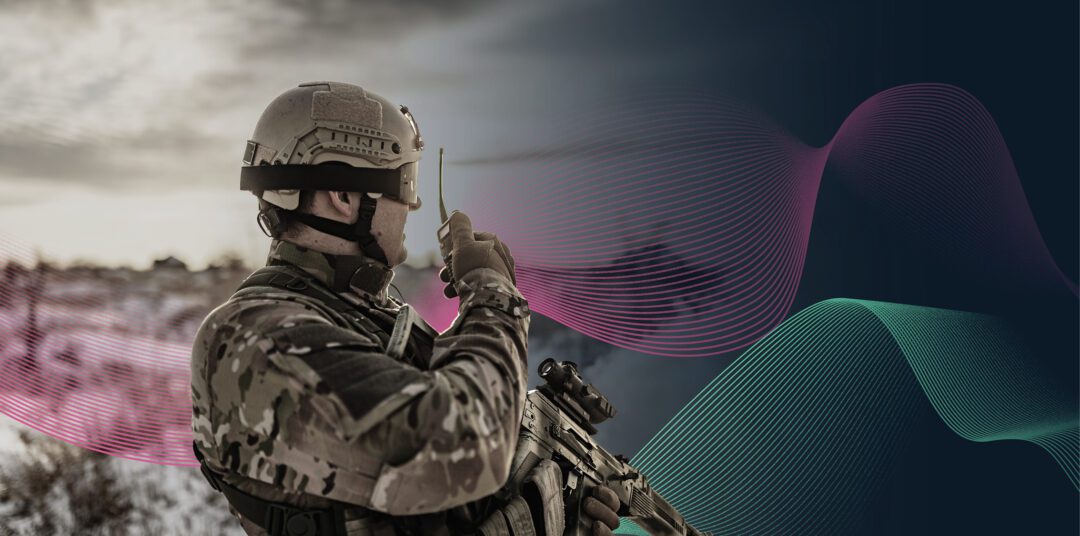
In an arena that moves by the day, procurement that takes years hands the initiative to adversaries – speed is a capability.
The Electromagnetic Spectrum (EMS) evolves far faster than traditional defence procurement cycles. By the time a capability clears requirements, test and fielding after three to five years, threat actors have moved on – new waveforms, new techniques and massed commercial radios change the problem set. Ukraine made a practical point: getting “good-enough” tools into operators’ hands quickly and iterating in theatre can deliver decisive advantage.
Speed is not about cutting corners; it’s about changing the model.
However, that requires three linked shifts.
First, procurement must prioritise modular, open-standards systems that can be upgraded and/or augmented faster – not replaced every 5-10 years.
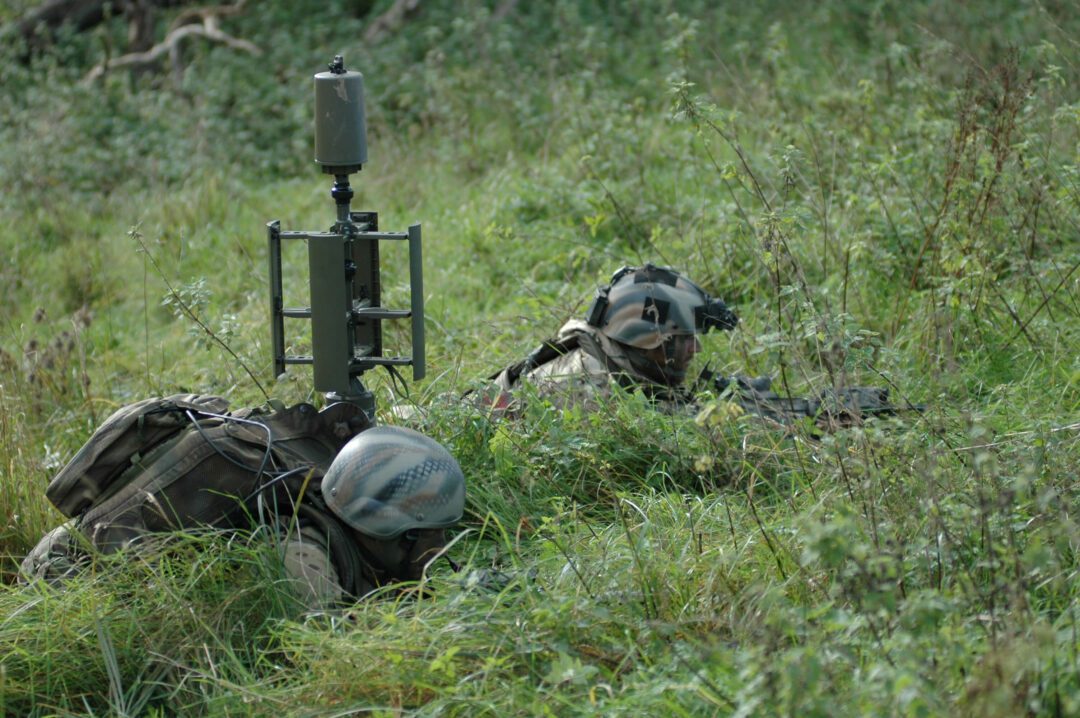
Platforms such as reconfigurable wideband sensors and person-borne EW suites (EM-Vis Perceive, EM-Vis Resolve, EM-Vis Deceive) illustrate the value of modularity: swap-in SDRs, software updates, and scalable power capabilities evolve with the threat.
Second, integrate fast feedback loops with operators.
Tactical sensors and C2 – notably EM-Vis Review’s unified EMS visualisation – must be prototyped in exercises, refined with user feedback and released in iterative increments. This approach is increasingly supported by advanced simulation and rehearsal environments. For example, EM-Vis Rehearse enables users to train in a safe, realistic and repeatable EMS environment without the need for live sensor hardware, while still replicating the experience of operating against real-world signals. This allows commanders to rehearse missions, stress tactics, techniques and procedures, and accelerate learning cycles before systems are deployed or updated in the field.
Third, accept pragmatic thresholds.
Mission-tailored Electromagnetic Attack (EA) like EM-Vis Deceive can be fielded for specific effects and improved rapidly, rather than delayed by chasing an unattainable perfect solution.
Organisations must also adapt funding and contracting approaches to reward speed and through-life agility:
-
Short, repeatable contracts for software and modular hardware
-
Depot-level support focused on rapid module replacement
-
Exercise-driven certification
In a domain where the enemy adapts on the scale of weeks, procurement cadence defines who controls tempo. Only when defence procurement teams and wider industry work together, are speed and efficiency possible.
The real procurement failure would be to treat speed as a nice-to-have – because in the EMS, speed is survival.

KEY TAKEAWAYS
This article discusses how the rapid evolution of the Electromagnetic Spectrum outpaces traditional defence procurement cycles, making speed and iterative delivery essential to maintaining operational advantage. It explains how modular systems, fast operator feedback loops and agile fielding approaches can help defence organisations adapt capabilities at the pace of emerging EMS threats.