For decades, commercial shipping has operated on the assumption that it sits outside the battlespace, but that assumption no longer holds.
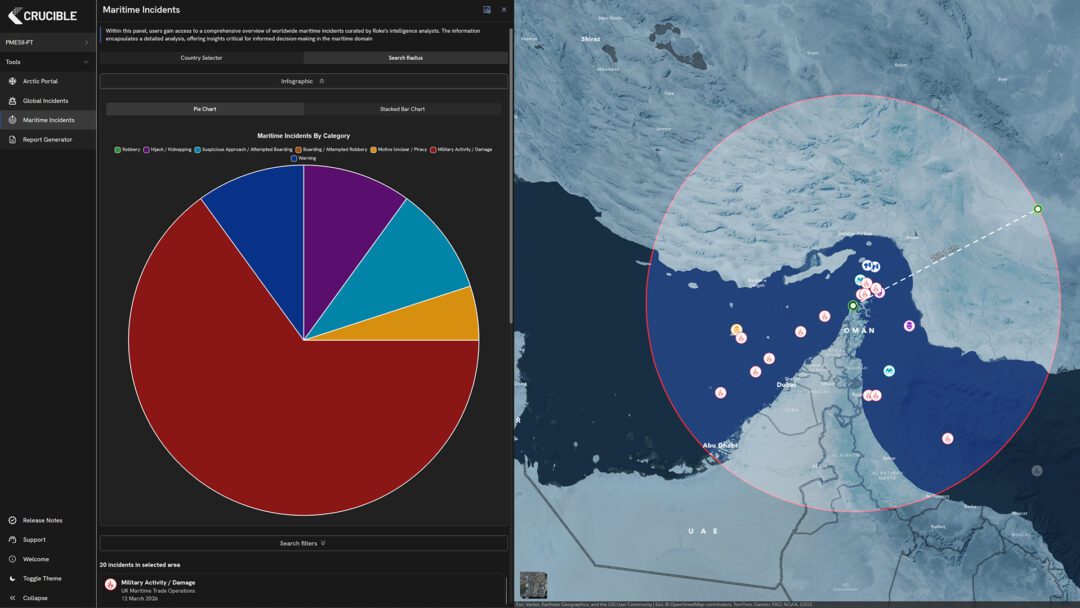
As the conflict with Iran escalates, merchant vessels are deliberately being drawn into the centre of modern warfare, with the Iranian regime strategically targeting ships to cause economic pain to the US and its allies.
The closure of the Strait of Hormuz has turned one of the world’s most important trade routes into a live operational environment. Around a fifth of global oil and gas normally passes through the strait, and its effective shutdown has already triggered emergency action by the International Energy Agency, which this week announced the largest ever release of strategic oil reserves in an attempt to stabilise markets. That move alone underlines the scale of the disruption now facing the global economy.
Drones are being used to target commercial shipping with increasing frequency and intent. Multiple cargo vessels have been struck in and around the Strait of Hormuz, including a Thai‑flagged bulk carrier hit by projectiles while transiting the waterway, forcing the crew to abandon ship. The ship was bound for India, which has since warned that the intensity and frequency of attacks are only increasing.
What can governments, armed forces and commercial shipping companies do to protect cargo ships in a vital trade route?
A BATTLE PROVEN DRONE THREAT
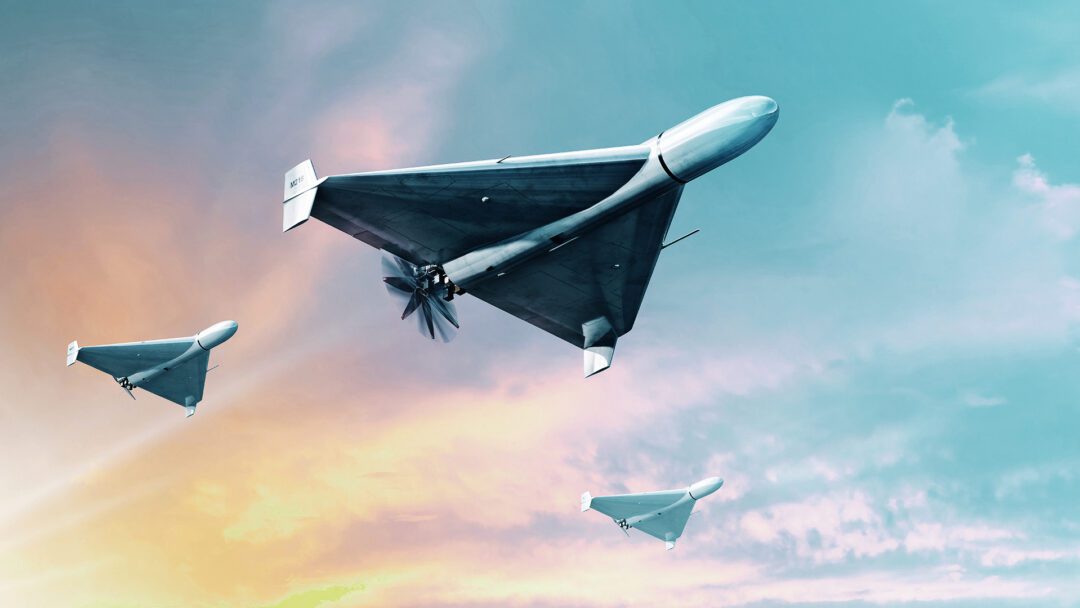
Iran’s drone capability has not emerged overnight. It has sold large numbers of its Shahed drone systems to Russia, meaning these systems have been sharpened through prolonged, high‑intensity use in Ukraine, where drones have been launched in volume and adapted rapidly in response to real defences. The tactics, flight profiles and employment we are seeing today are informed by hard lessons learned in combat. That matters, because it means the threats now facing merchant vessels are proven systems being used deliberately, not experimental platforms probing the edges of conflict.
In response, Middle Eastern countries have drafted in support from Ukraine to fend off the Iranian attacks, with Jordan bringing in low-cost interceptors mass-produced by Ukraine to help protect key infrastructure being targeted in the region.
SHIPS REMAIN DANGEROUSLY EXPOSED
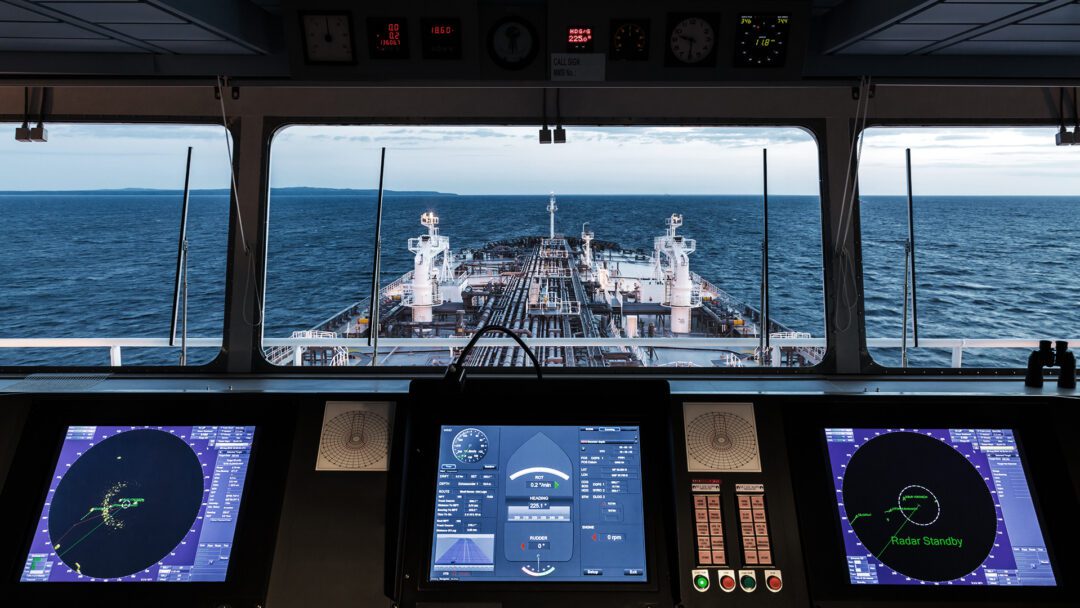
Iran’s neighbours are scrambling to bring in counter-drone measures, while the US and the UK are deploying warships in the region. However, most ships remain dangerously exposed, with many lacking any capability to defend themselves from attack. Spotting “something in the sky” is not enough. Without the ability to detect, identify and classify an incoming aerial threat, crews have no basis for a decision, let alone a defence.
If a vessel cannot determine whether an approaching drone is conducting surveillance, relaying targeting data, or carrying an explosive payload, it has no meaningful way to respond.
NEW: CUAS DEFENCE STRATEGY 2025 – DOWNLOAD THE WHITEPAPER
Small UAS are reshaping the battlespace. Discover the principles of a modern CUAS response.
THE NEED FOR ADVANCED COUNTER-UAS
It is becoming increasingly clear that advanced counter-UAS measures must become a core element of maritime resilience. These systems allow operators to understand what type of drone is approaching, how it is being controlled, and how best to defeat or disrupt it. Without that insight, defensive action is guesswork.
Importantly, this is not about militarising trade or warmongering. It is a necessary measure to keep ships moving and global supply chains intact. The idea that shipping can simply wait out this phase, or rely solely on naval escorts, ignores both scale and reality. Naval escorts provide partial cover at best, and the global shipping network is too vast, too distributed and too economically critical to shelter behind a cordon of warships.
The only viable answer is for vessels to be capable of protecting themselves.
The UK has a decision to make, as does the shipping industry: continue to treat maritime security for commercial shipping as someone else’s problem, or accept that the frontline has shifted and act accordingly. Protecting trade routes means equipping vessels with the tools to operate safely in contested environments, which means investing in advanced counter‑UAS capabilities that provide awareness, confidence and control.
Every day that vessels transit contested waters without adequate counter-UAS capability is a day that global supply chains run on exposure and luck. That is not a sustainable position, and the next strike will make that impossible to ignore.
Don’t leave maritime security to chance
Complete the form to get in touch with our team, and discover the counter‑UAS and OSINT capabilities your fleet needs now.
DISCOVER THE CORTEXA C-UAS FAMILY

RELATED ARTICLES
Click here to find out more about Roke’s approach to counter-UAS.

Matthew Albans
CTO