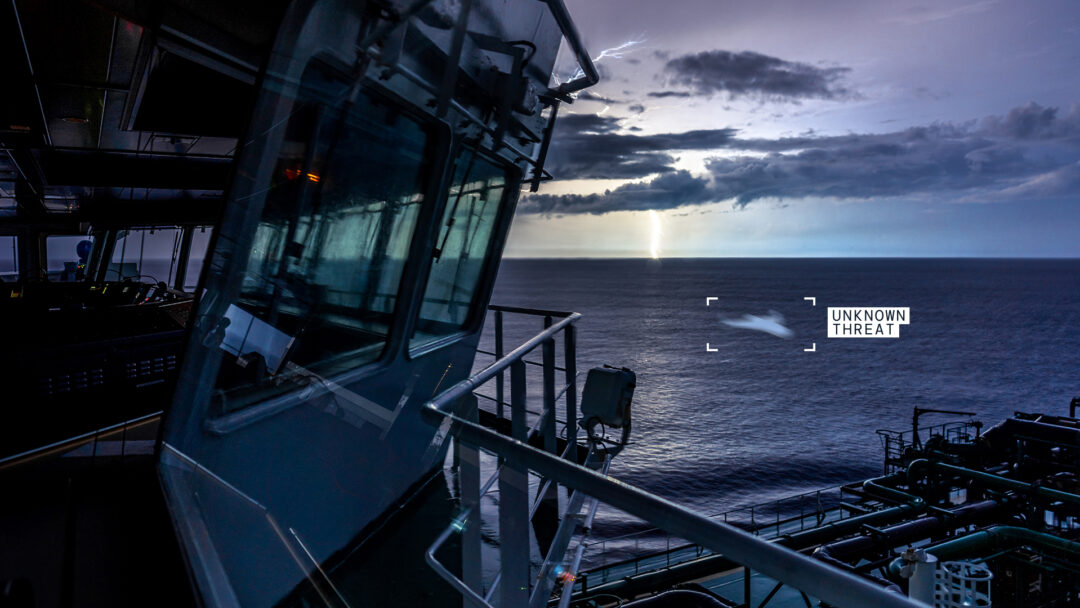
The UK’s current Counter-UAS (C-UAS) approach of innovation and adaption to threat was designed for a relatively stable threat environment.
This world no longer exists. As the threat landscape evolves, our defence innovation processes must adapt accordingly.
In line with these trends, Roke has adopted a novel mindset shifting priorities to develop modular, scalable, and flexible answers to respond to an ever-changing UAS challenge.
Adversaries’ warfare tactics, techniques and procedures (TTPs) are changing on a weekly basis, we need to respond by implementing adaptable novel solutions, reducing the reliance on static, fixed systems designed for conflicts that now only exist in history books.
UKRAINE, POLAND & ESTONIA
Out of necessity, countries at war must adapt at pace. Ukraine, for example, has embraced a pragmatic, “whatever works” approach that enables rapid innovation cycles to provide capability and speed. To maintain pace in the UAS domain, Ukraine has leveraged commercial technologies as consumables allowing them to rapidly expand capability while reducing cost. Significant investment has gone into equipping brigades and even individual companies, with the capability for localised UAS production, by using 3D printing and self-built drone platforms. This decentralised approach is completely novel and dramatically cuts the cost and logistical burden associated with traditional drone manufacturing and deployment. In high-pressure, safety-critical missions, reliability and availability matter far more than highly specialised, secure, bespoke drone technology.
Other European countries have noted this shift from Ukraine and the results it has delivered. They recognise the need to reshape their traditional procurement processes, to accept greater risk, accelerate decision-making, and move away from the slow, monolithic model of conventional defence projects. Across eastern Europe, countries are countering Russian threat by compressing decision cycles and prioritising adaptable solutions. FORT, a NATO defence innovation accelerator has officially opened in Poland, with the aim of supporting the development and production of advanced technologies for Dual-Use across military and civilian applications. Poland’s Defence Minister, Władysław Kosiniak-Kamysz called for a ‘radical acceleration in investments in the Polish defence industry and procurement in Poland’.
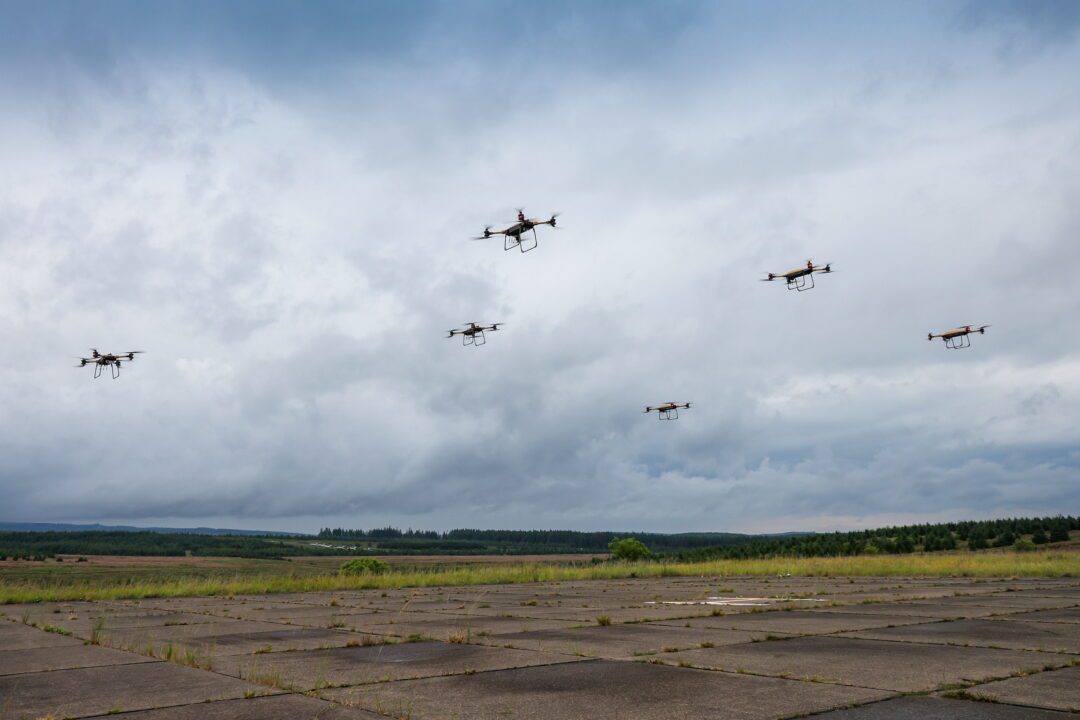
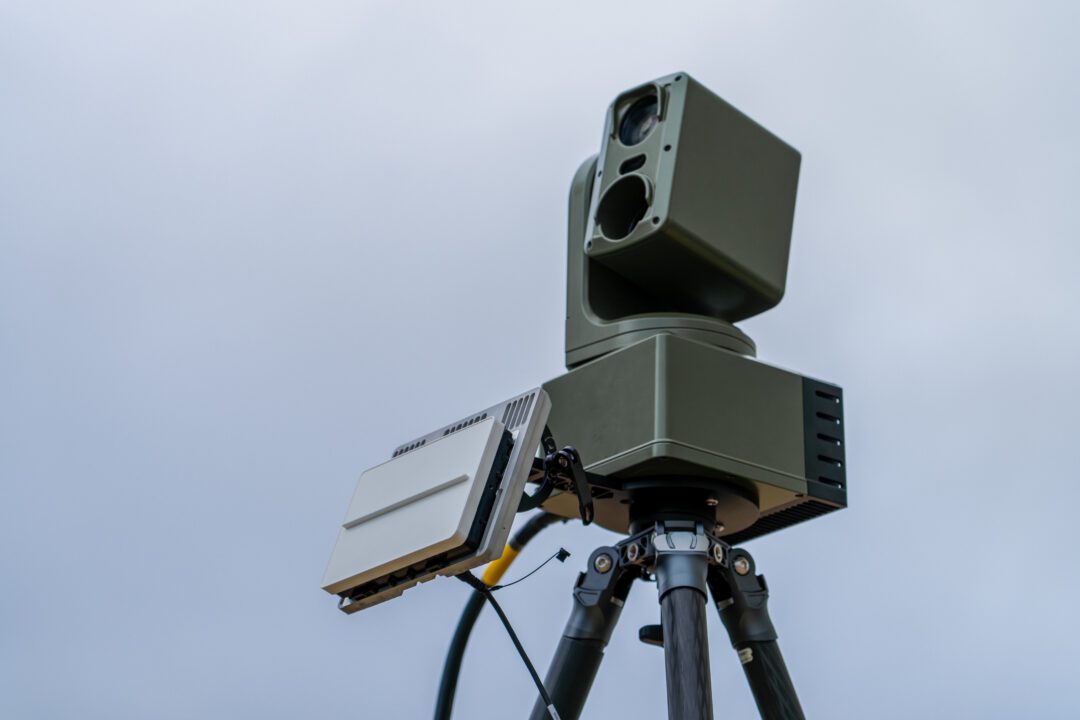
This month Poland also announced that it is building what it claims to be Europe’s most advanced anti-drone system. Known as San, the new system is being developed by Polish defence group PGZ, Norwegian defence company Kongsberg and Polish radar manufacturer Advanced Protection Systems. It is expected to cost €3.5bn and will be financed through the EU’s new Safe programme, which aims to increase arms production in Europe to counter Russia’s aggression.
Estonia is emerging as a hub for counter‑UAS innovation, developing AI‑driven, modular C‑UAS systems that integrate both kinetic interceptors and non‑kinetic effectors like jammers and sensors, often with a strong emphasis on affordability and mass‑production.
ACCELERATING INNOVATION CYCLES IN THE UK
For the UK to keep pace and realise the Government’s goal of being a global innovation hub by 2035, it needs to open the door to accelerated innovation processes. It is time to drop the barriers of stringent procurement cycles and lean into collaboration with vendors to deliver rapid and novel capabilities to the armed forces. We need to move beyond the inertia of a procurement system that locks in vendors, which dilutes the opportunities for innovation, and move away from the comfort of the familiar. Instead, we should focus on a collaborative system that redefines readiness.
Traditional waterfall procurement is a linear, sequential process that delivers a 100% solution before end users can even handle it.
But by the time a traditional procurement process is concluded today, the pace of technological innovation means the solution delivered is already out of date. Defence procurement needs to move towards a more agile approach, which swiftly delivers an 85% solution but with novel processes such as mission partnering in place to support iterative development and maintain pace with technology. By encouraging collaboration between TLBs, end users and industry, we can enable an adaptive, responsive capability development that keeps pace with modern threats and the realities of modern warfighting. Finally, by taking a vendor agnostic approach we can share data and insights with allies, enabling a united best practice approach that is strengthened through partnering.
CORTEXA GUARDIAN – BUILT TO ANTICIPATE FUTURE BATTLES
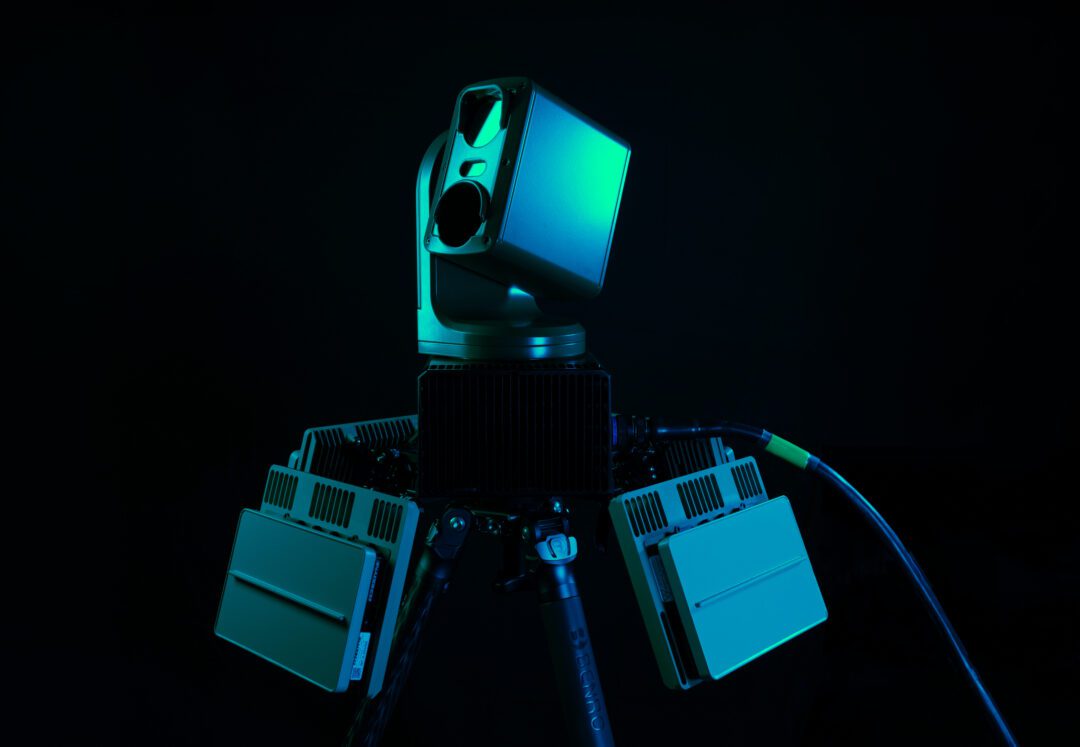
Roke has a rich history of being a vanguard of innovation, we understand the mindset to innovate at pace to deliver effective capabilities. CORTEXA GUARDIAN sticks to the fundamental principles of a vendor neutral architecture, open standards and AI-driven detection to deliver a flexible and scalable capability that can evolve as fast as the threat.
CORTEXA GUARDIAN is built upon Rokes’ unique software, to deliver an overall system that is modular in both design and deployment. Drone technology is moving away from traditional specialists, becoming increasingly available to untrained operators. Therefore, systems to counter the threat of drones must apply the same principle and be usable by all operators, not just C-UAS specialists. This means it should be a simplistic system that can be deployed with minimal training.
Vendor neutrality is key as suppliers should be chosen on merit rather than on previous contracts, to keep up with the pace of threat. It also enables defence teams to tailor their response to anticipate and respond to specific threats, and update in real time as the situation evolves.
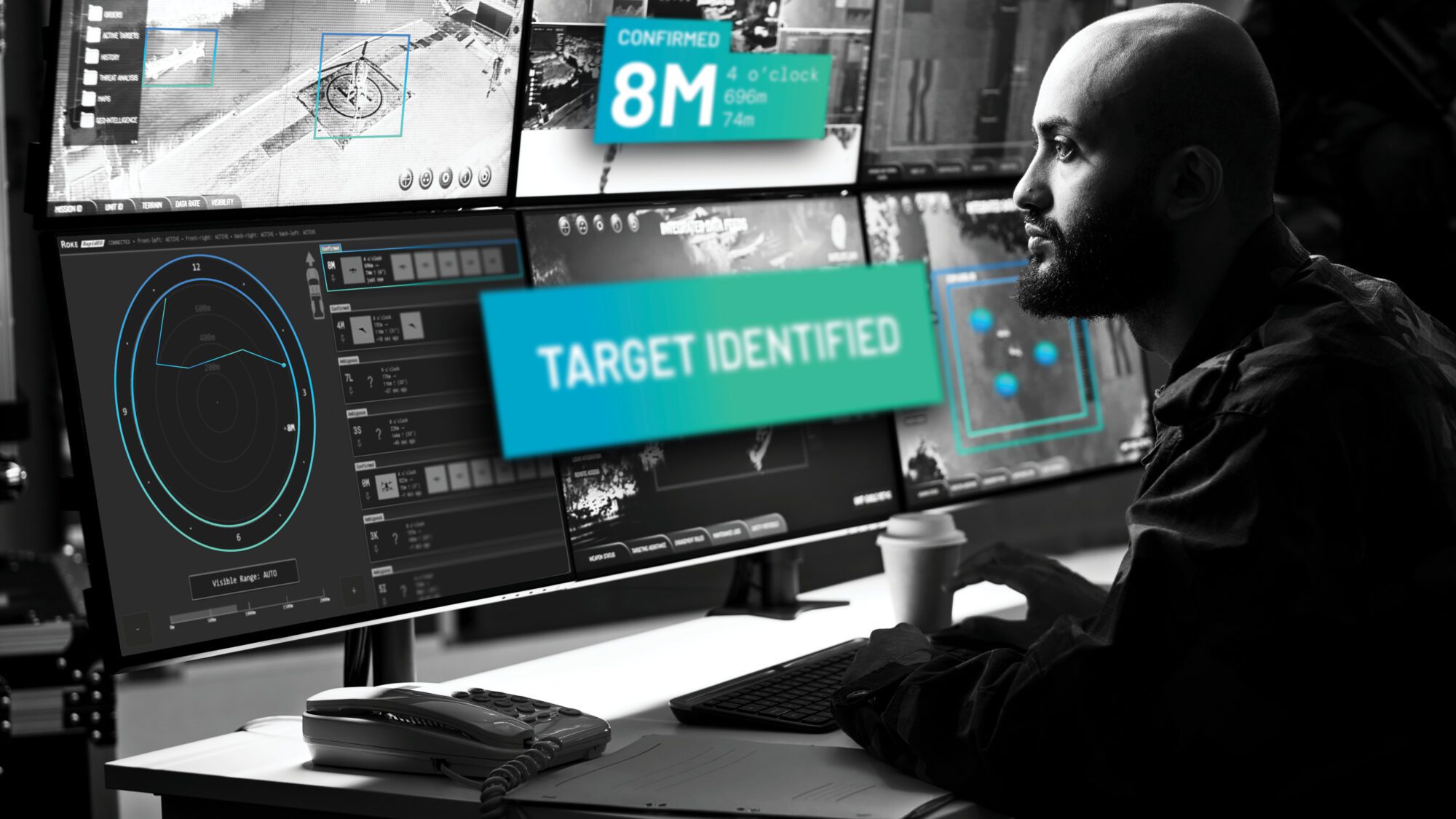
This means sensors can operate autonomously, share meaningful data, and support real-time decision-making. Within a rapidly shifting landscape, CORTEXA GUARDIAN is built to scale, integrate, and evolve. It is designed to give us the insights needed to anticipate and adapt to conflicts at the speed needed for success.
The conflict in Ukraine has shown you cannot win future wars by being reactive – we will need to be able to anticipate in advance, shift the gears of innovation quickly, and iterate at speed.
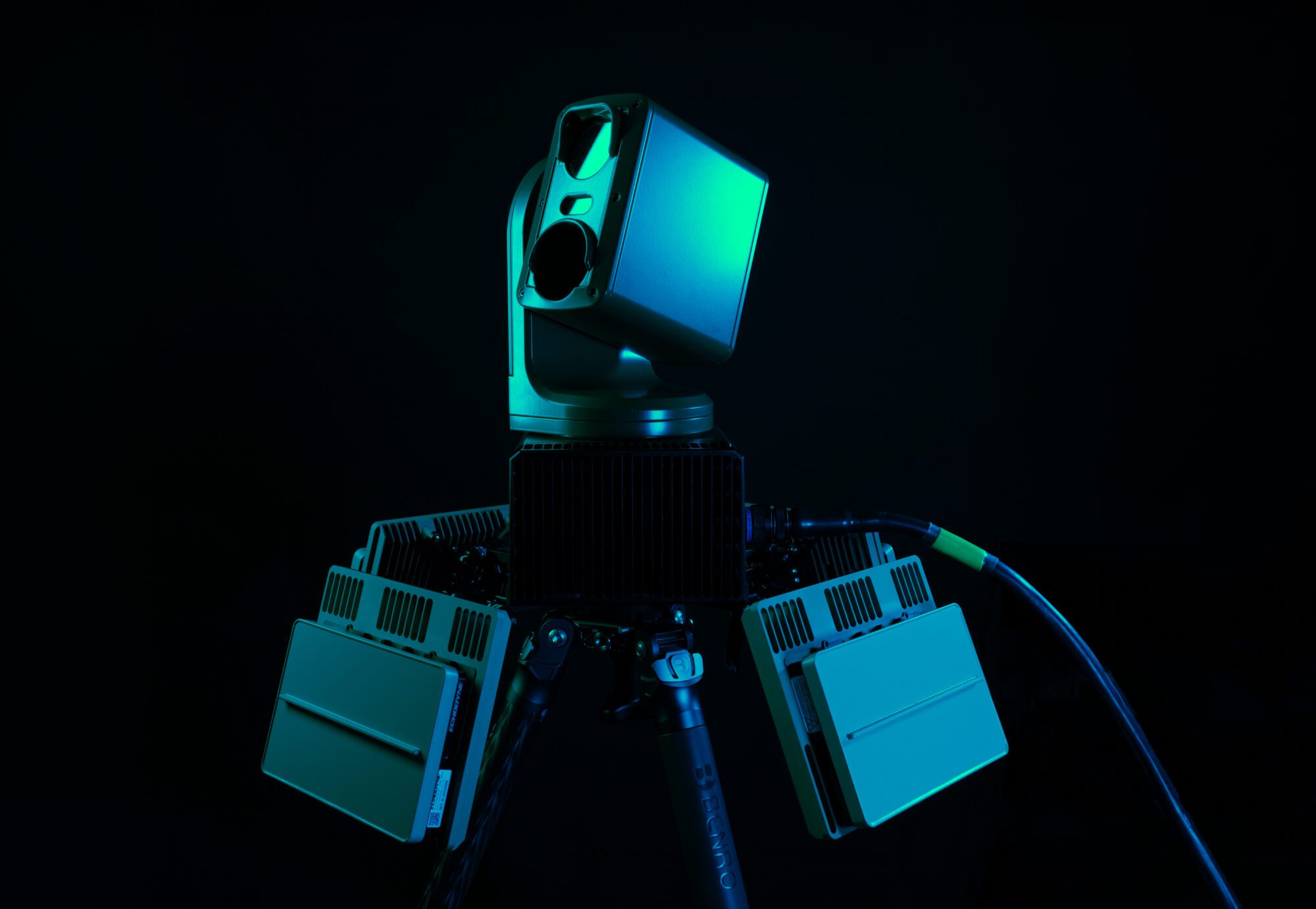
This requires a software-defined approach that will enable troops to adapt capabilities without replacing entire systems. What’s more, software that can be integrated into different hardware and updated swiftly allows us to evolve capabilities without replacing entire systems.
CORTEXA GUARDIAN, which is defined on this software-defined approach, is underpinned by Roke’s AI-powered RapidEO automated threat detection software. This combines all sensors together to provide a clear air picture. RapidEO is a high-resolution, fully autonomous software system that can simultaneously detect, identify and track multiple UAS targets at extremely fast speeds. It was designed to find a range of drones, from fixed wing to fast-moving First Person View (FPV) drones.
NEW: CUAS DEFENCE STRATEGY 2025 – DOWNLOAD THE WHITEPAPER
Small UAS are reshaping the battlespace. Discover the principles of a modern CUAS response.
Using OSINT to foresee future threats
If CORTEXA GUARDIAN enables forces to find and identify drone threats, then OSINT provides the means to get ahead of the game and predict where the threat could be.
Platforms like CRUCIBLE® demonstrate the power of data fusion and OSINT in anticipating threats rather than just reacting to them. CRUCIBLE® maps incidents geospatially, revealing concentration patterns across specific regions and providing a complete picture of each event. Alongside this, its temporal analysis identifies whether incidents cluster into distinct time periods — a key indicator of whether activity is random or part of a coordinated campaign.
By spotting patterns that indicate attack preparation, we can anticipate attacks with fast, accurate, scalable, and trusted intelligence – using them to get upstream of drone incidents and enable accurate predictive analysis.
AN OPEN APPROACH TO STANDARDS
We need to move away from proprietary technologies that hinder innovation and only serve the needs of industry and not the customer. Embracing open standards offers a collaborative bridge between industry partners and end users to progress technology in a mutually beneficial manner. The adoption of standards such as SAPIENT and applications like TAK (Team Awareness Kit/Tactical Assault Kit) helps to standardise interfaces and enables seamless integration of sensors, trackers and effectors.
TAK is an application that uses Cursor on Target (CoT) as a standard messaging service and SAPIENT is an open-architecture standard aimed at enhancing situational awareness. SAPIENT is a strategic enabler that allows sensors and systems to communicate in a structured and interoperable way and TAK is an application for personnel to securely share real-time geospatial data secure and tactical decision-making.
SHIFTING TO AN INNOVATION MINDSET
Countries under immediate pressure are prioritising speed, modularity, and interoperability over bespoke solutions. Poland and Estonia have already shifted their mindsets to be better prepared for emerging and evolving threats. The rest of Europe needs to draw the same conclusions to balance the need for rapid innovation and procurement without compromising assurance. Software-defined, vendor-neutral platforms, underpinned by OSINT predictive analysis offer a swift and practical path forward.
In the UK we have a strong heritage of innovation in defence, which Roke is proud to have been at the heart of for 75 years.
We know we have the smarts in this country to respond to the rising threat; we just need the procurement processes, administrative approach and wider mindset to keep up and not stifle innovation in its infancy.
SPEAK TO A C-UAS OR OSINT EXPERT TODAY
Complete the form to get in touch with our team, and discover the counter‑UAS and OSINT capabilities your organisation needs now.
DISCOVER THE CORTEXA C-UAS FAMILY

RELATED ARTICLES
Click here to find out more about Roke’s approach to counter-UAS.