BLIND SPOTS IN EVEN THE MOST ADVANCED SYSTEMS
Sightings of drones over airports have caused major disruptions across Europe in recent months. On November 22, 2025, civilian and military air traffic at Eindhoven Airport in the Netherlands was paused after drones were reported nearby. In Belgium, unidentified drones were seen on three nights from October 31 to November 2, 2025, over Kleine-Brogel Air Base, a facility believed to house US B61 nuclear bombs.
These sightings were not restricted to those airports serving the military. Belgium’s Liege airport temporarily halted flights on two separate occasions within a week due to drone sightings, forcing the diversion of many incoming planes and the grounding of others due to depart.
“At first, drones flying over our military bases were seen as our problem,” Theo Francken, Belgium’s Minister of Defence told the BBC. “Now it has become a serious threat affecting civilian infrastructure across multiple European countries[1].”
Between the issues faced by Liege Airport, drones were spotted at Sweden’s Gothenburg-Landvetter airport, forcing more than a dozen flights to be rerouted or cancelled. Prior to this, in September 2025 several airports in Denmark, including Copenhagen, closed temporarily due to reported drone sightings.
[1] Belgium rushes to secure drone defences after airport disruption, BBC News 7 November 2025
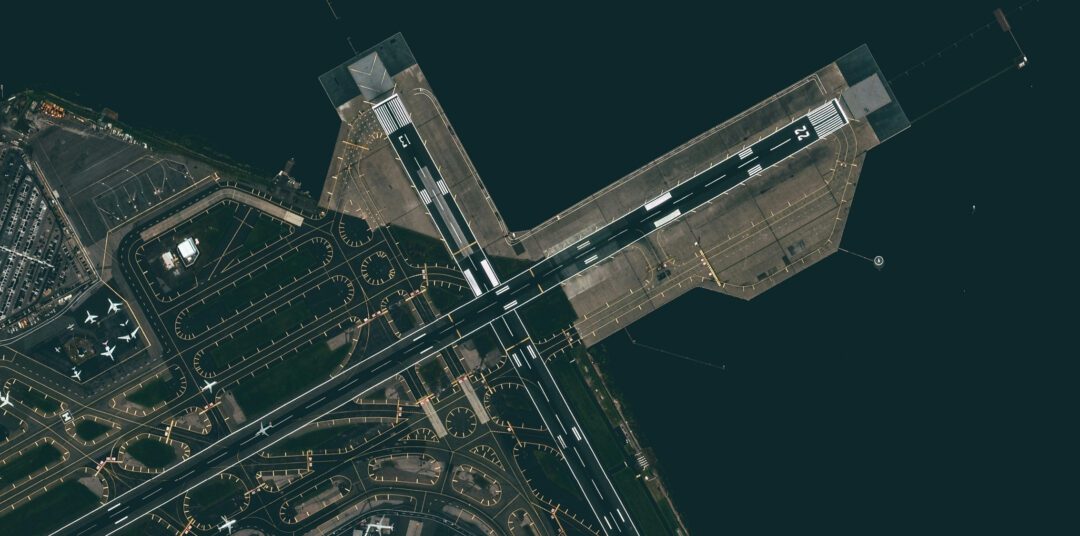
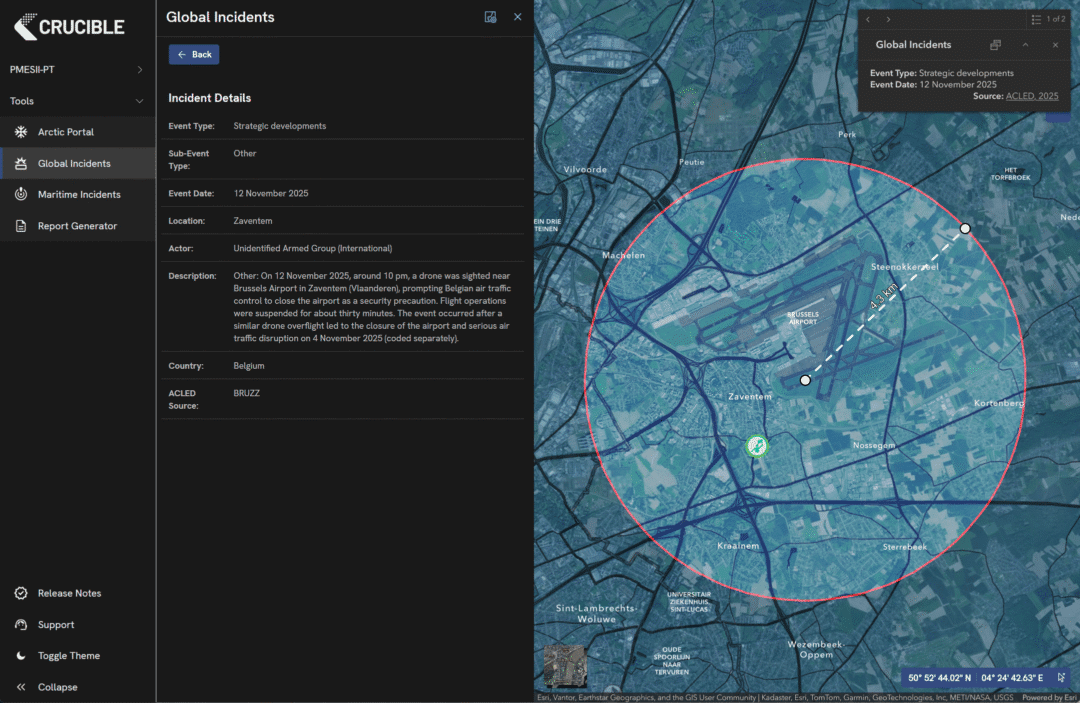
Global Incidents view of UAV activity at Military base outside Brussels, Belgium. Source, Crucible, 25th November 2025
FROM FIXED DEFENCES TO FLEXIBLE LAYERS: THE CASE FOR MODULAR COUNTER-DRONE SYSTEMS
How can airports address this threat? Common counter-drone systems for airports combine multiple detection layers such as radar, radio frequency (RF) sensors, acoustic sensors, and camera systems to detect, track, and manage unauthorised drones[2]. These systems require specialist operators, trained to use the technology, and regular maintenance to ensure their ongoing effectiveness.
Combining multiple technologies can improve drone detection, but integrating and synchronising these systems can be complex and costly. Many smaller, regional airports lack the necessary integrated processes, standard operating procedures, and ability to neutralise drone threats efficiently.
Even when deployed as a multi-layered detection strategy, each method has limits. Cameras struggle with lighting, RF detection with signal congestion, radar with bird confusion and identifying smaller drones, and acoustics with engine noise. This can lead to blind spots or coverage gaps, which can be exploited by malevolent drone operators.
[2] Drone detection in airport environments: A literature review, Array, December 2025
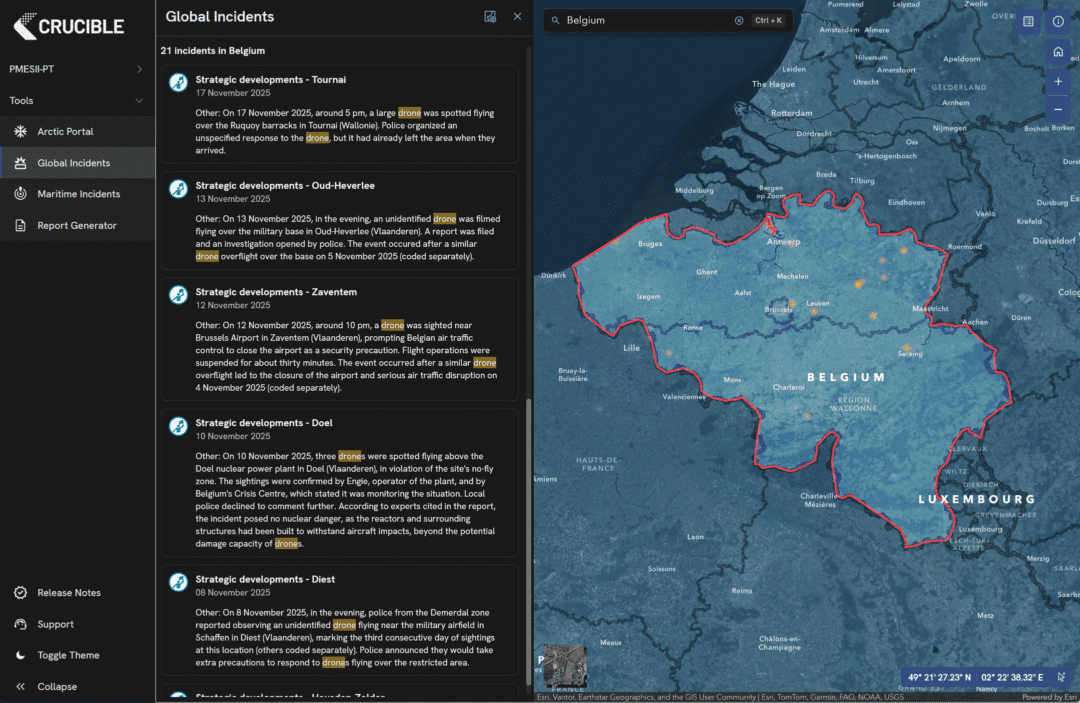
Global Incidents view of Brussels. Source, Crucible, 25th November 2025
SCALABLE SECURITY: HOW MODULAR C-UAS SOLUTIONS EMPOWER AIRPORTS OF ALL SIZES
One solution for larger hub airports looking to cover detection vulnerabilities or regional facilities looking for a cost-effective solution is the use of portable, easy to use systems. Built for use by mobile troops in contemporary combat zones, these systems can both fill those blind spots and provide a kit deployable by smaller airports through their ground security teams.
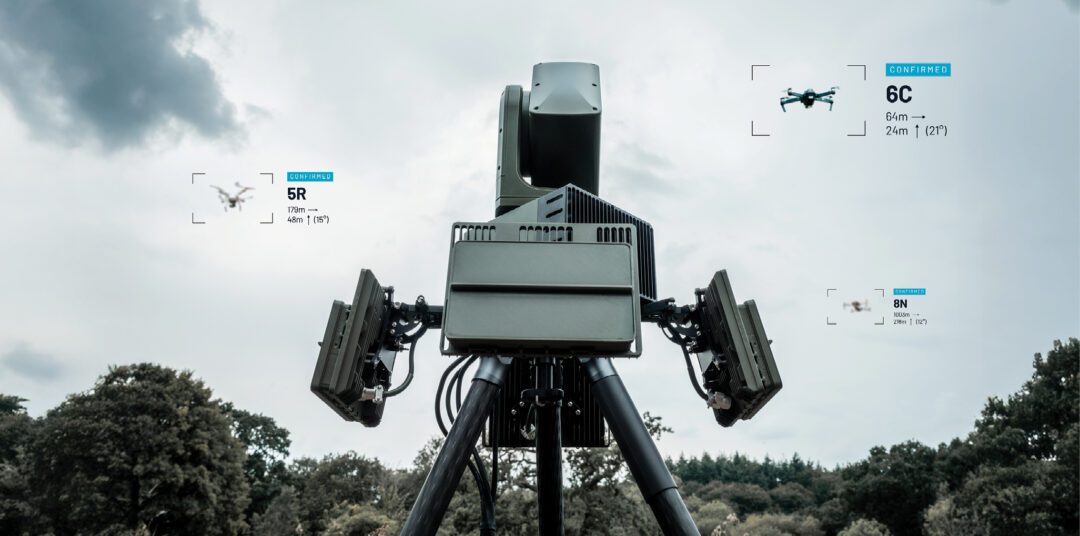
Roke’s CORTEXA GUARDIAN is such a system. This modern lightweight, mobile, mast-mounted hardware system combines radar and Pan, Tilt, Zoom (PTZ) sensor inputs to provide a high-resolution, fully autonomous capability. It is the only system in the world to be able to detect and track 20 targets at once and identify 10 concurrently.
At Roke, we have the capabilities and experience to support the development and delivery of a world-class drone detection and counter system.
Our solutions can be adapted to meet the specific requirements of any operators looking to protect critical national infrastructure. Select one or two products to meet a clearly defined need, integrate several to solve domain-wide issues, or a work with our team to design a bespoke solution for a unique challenge.
We offer a truly modular, open standard approach, providing the building blocks to construct the counter drone system you need – whether this means a portable system for mobile use around your perimeter, or hardware mounted on bases and vehicles.Read more in our CUAS whitepaper, click the link below.
Read our CUAS Whitepaper in the link below.