Buying sophisticated detection hardware is straightforward, but the real advantage lies in how well you turn sensor feeds into decisions – in real-time, at the edge, with robust analytics and data sovereignty built‑in.
The counter-UAS market has matured quickly, with an abundance of radar, RF detection, and electro-optical technologies to detect drones already accessible in the market. These solutions are under continual pressure to evolve in response to the scale, frequency and sophistication of the threat they are attempting to counter.
When Iranian Shahed drones struck a British base in Cyprus this month, it drew new attention to the fact that drone threat is no longer confined to active warzones, and it doesn’t respect the boundaries between military and civilian infrastructure.
Poland’s decision to invest €3.5bn in what it is billing as Europe’s most advanced anti-drone system — prompted in part by Russian drones entering Polish airspace last September — signals that European thinking is heading towards integrated, intelligent, always-on defence, rather than reactive responses.
The September incursion was a clear demonstration of the issue of cost asymmetry. Poland rushed to send fighter jets armed with million-euro missiles to intercept drones costing perhaps a thousand dollars each.
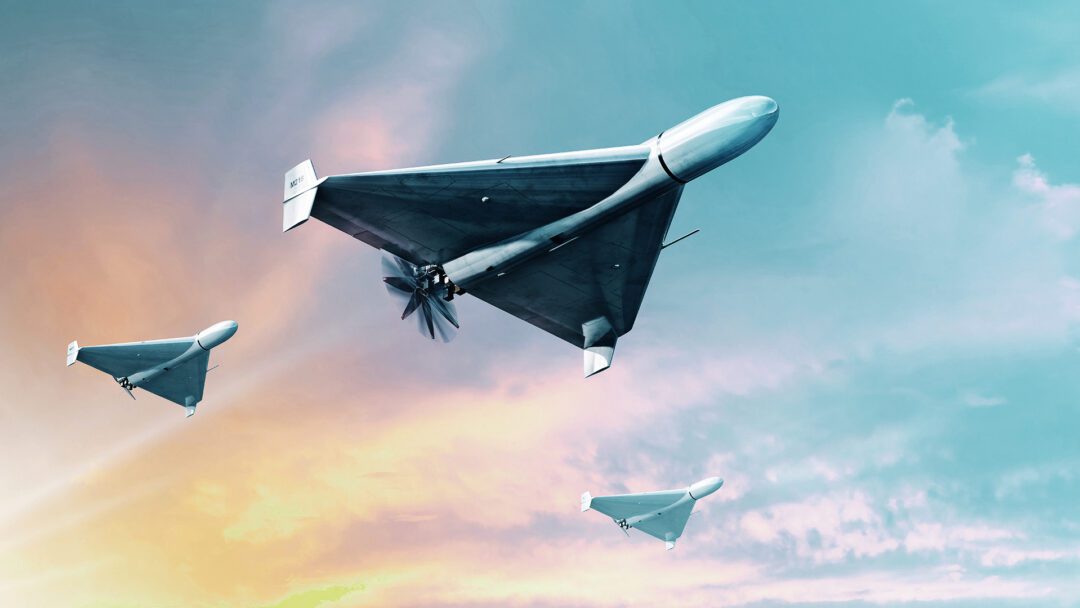
In Ukraine, Russia deployed hundreds of cheap Shahed drones in large swarms to saturate and overwhelm air defences, forcing the US and allies to use much more expensive interceptors like Patriot missiles. This cost gap is the starting point for any serious conversation about counter-UAS: how do we build defence capability to match the agility, cost-effectiveness and flexibility of the threat?
HARDWARE OFTEN OUTPACES INSIGHT
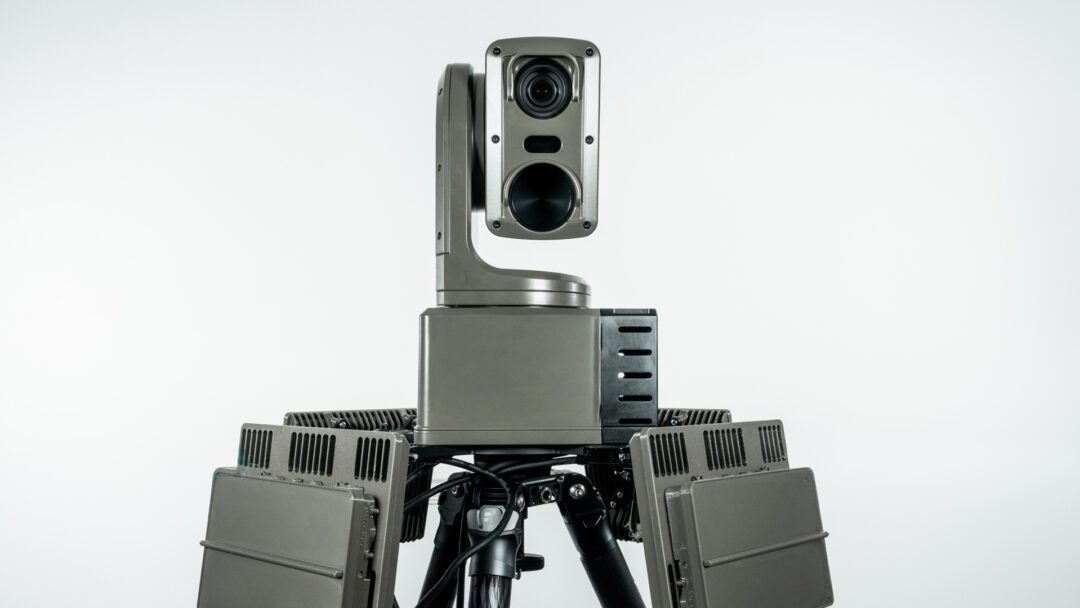
Over the past five years, airports, military bases and critical infrastructure sites have invested heavily in detection hardware, yet many of those same sites remain data-poor in practice. They may have bought sensors, but these often operate in isolation, failing to talk to each other or integrate information effectively. Engagement logging is inconsistent or absent altogether. False-positive rates are typically high, and operators can be left to manage multiple uncorrelated feeds under high operational pressure and with minimal decision support.
The practical consequence is alert fatigue, a well-documented phenomenon in which operators exposed to high volumes of alarms, many of them false or ambiguous, become progressively less responsive to them over time. This can lead to slower response times and declining confidence in the systems themselves. As a result, there is increased risk of missing a genuine threat. The sensors may be working exactly as designed, but the broader system around them is failing the people who must act on it.
HUMAN-CENTRIC DECISION SUPPORT
When people talk about AI in counter-UAS, the conversation often revolves around autonomy. In other words, how much of the decision can the machine make? That’s understandable given how quickly AI is compressing timelines in modern conflict, but for most operators, it’s the wrong focus.
A more useful question, especially if your rules of engagement mandate human-in-the-loop decisions would be: how do you help a human operator make a faster, calmer, more defensible decision?
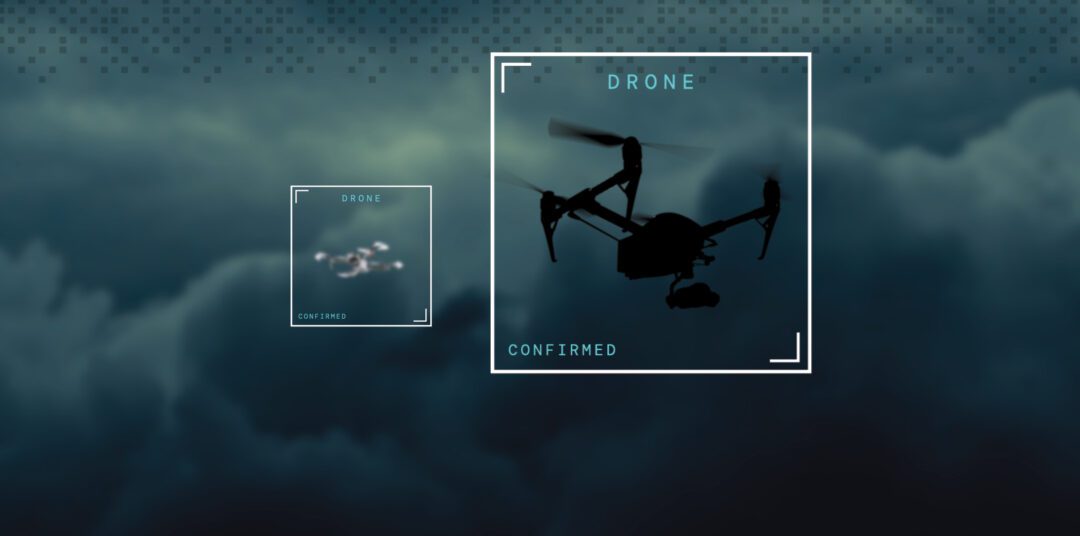
One answer is to reduce ‘cognitive burden’. Done well, AI can help filter out obvious non-threats before they reach the operator.
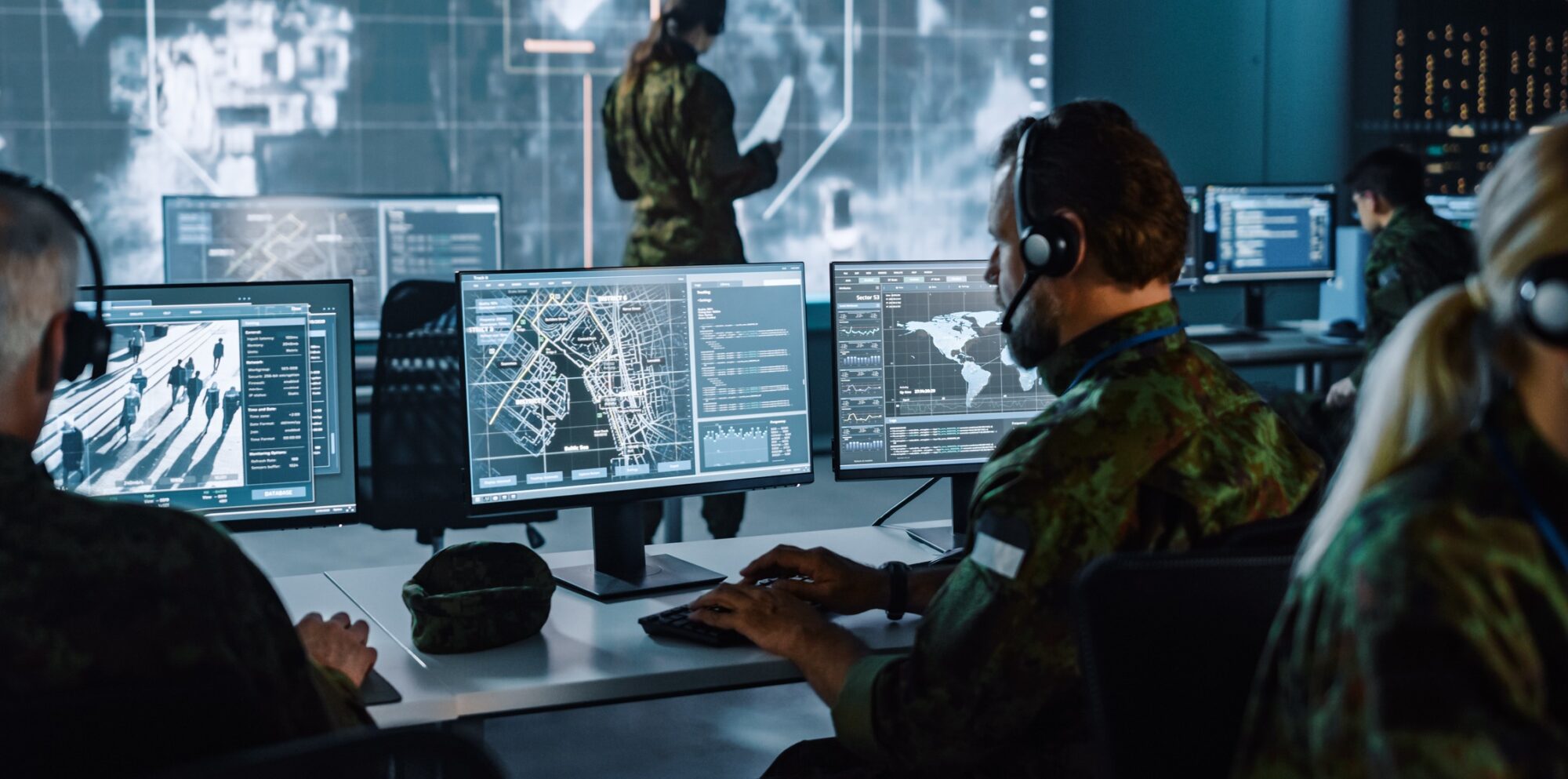
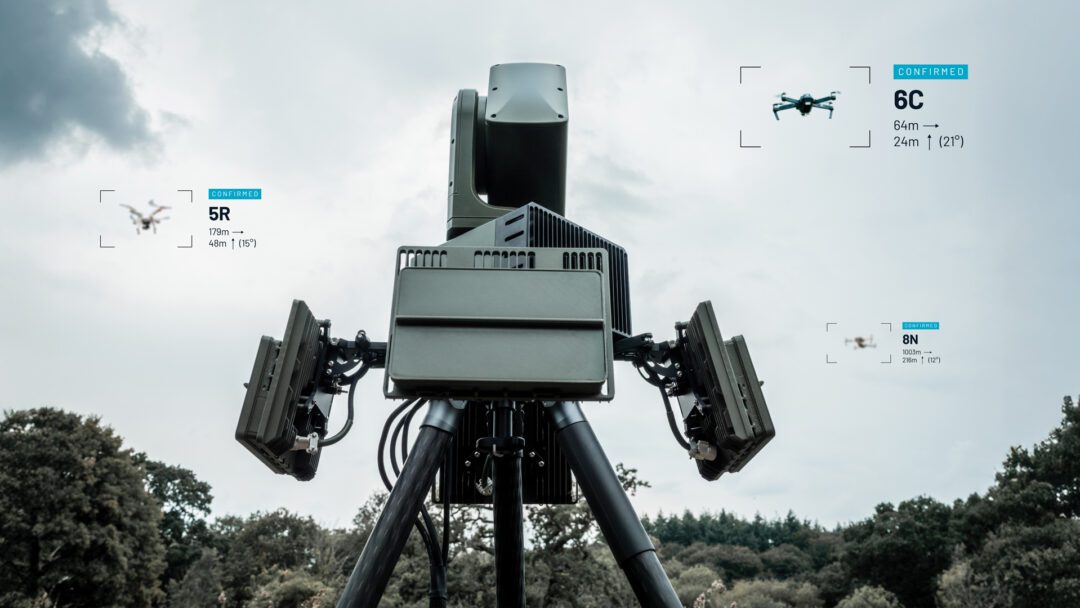
It automatically correlates data across radar, RF and visual sensors, and surfaces the evidence behind any recommendation so the operator can see exactly what the system has seen and why it flagged it. The human stays in control, and the system earns trust incrementally through real use instead of demanding it upfront.
There’s a practical benefit to this approach beyond individual operator performance. When interfaces are intuitive and consistent, you don’t need niche specialists to run them effectively. Generalist operators, under pressure, can use the system with confidence. That matters enormously when thinking about scalability and resilience across a wider force.
DESIGN FOR THE REAL WORLD, NOT THE LAB
Many counter-UAS deployments don’t have the luxury of reliable high-bandwidth connectivity. In tactical environments, remote infrastructure and contested or degraded networks, full motion videos or streaming vast amounts of data to the cloud is simply not viable. This changes the design problem considerably, because AI that depends on cloud infrastructure could fail under many operational conditions.
Processing needs to happen at the edge, locally, applying models where the data is generated, with only the most relevant information transmitted onwards. One practical way of doing this is by taking intelligent “snippets”, where rather than attempting to log continuous video, the system captures short clips tied to specific detections. These clips are sufficient for operator verification, documentation and later analysis, without the bandwidth demands that make continuous capture unworkable across much of the operational landscape.
NEW: CUAS DEFENCE STRATEGY 2025 – DOWNLOAD THE WHITEPAPER
Small UAS are reshaping the battlespace. Discover the principles of a modern CUAS response.
TURN EVERY ENCOUNTER INTO INTELLIGENCE
Every drone encounter contains intelligence about origin, a new flight behaviour, an unfamiliar platform, or a shift in operator tactics. If that data isn’t captured, structured and fed back into the system’s models, it disappears and the organisation is no better prepared for the next encounter than it was for this one.
Aviation’s approach to flight recorders offers a useful parallel. The value of a black box isn’t felt in the moment of an incident, but from what the data reveals afterwards and how that shapes safer practice going forward. Counter-UAS systems that log engagements consistently can improve their classification and filtering over time, getting progressively better at distinguishing genuine threats from background activity as they accumulate real-world data. Systems without that capability remain static, which means the only party getting smarter from each encounter is the adversary.
There is also a collaborative dimension to this. Logged imagery and detection data can move across allied systems, shared peer-to-peer or via secure gateways, giving other operators early warning of new threat profiles before they encounter them directly. Poland’s San system, which will link sensors and effectors across 18 mobile batteries into a unified national and allied command network, will reflect this kind of architecture characterised by distributed hardware and shared intelligence.
THE COUNTER-DRONE RACE, IS A DATA RACE
The organisations that pull ahead in counter-UAS won’t necessarily be those with the longest detection range or the most sophisticated hardware. They’ll be the ones that give their operators a clearer, more manageable picture, learn from every encounter, and retain meaningful control of the data that underpins future advantage.
Once you have AI at the edge and robust engagement logging in place, there also remains a bigger strategic question about where all this data lives and who controls it. Data-driven defence only delivers advantage if systems at the edge feed into a coherent, sovereign data layer, which integrates with wider defence and security networks, can incorporate external intelligence sources, and is designed to remain operational even when disconnected from central infrastructure. Systems that outsource their analytics to third parties, or that cede proprietary control of engagement data to a vendor, can quietly undermine long-term national resilience in ways that are not always apparent at procurement stage.
We’ll return to this question in a dedicated piece focused on data sovereignty, and how it should shape how we think about counter-UAS technology from the very beginning.
We’ll return to this question in a dedicated piece focused on data sovereignty, and how it should shape how we think about counter-UAS technology from the very beginning.
SPEAK TO A C-UAS EXPERT TODAY
Complete the form to get in touch with our team, and discover the counter‑UAS your organisation needs now.
KEY TAKEAWAYS
Data-driven defence, not hardware alone, will determine success in the counter-UAS race, with real-time analytics, edge AI, and integrated sensor systems enabling faster, smarter decision-making. Organisations that reduce operator burden, learn from every encounter, and maintain control of their data will gain a critical operational and strategic advantage over evolving drone threats.
DISCOVER THE CORTEXA C-UAS FAMILY

RELATED ARTICLES
Click here to find out more about Roke’s approach to counter-UAS.