INSTABILITY IN COLUMBIA
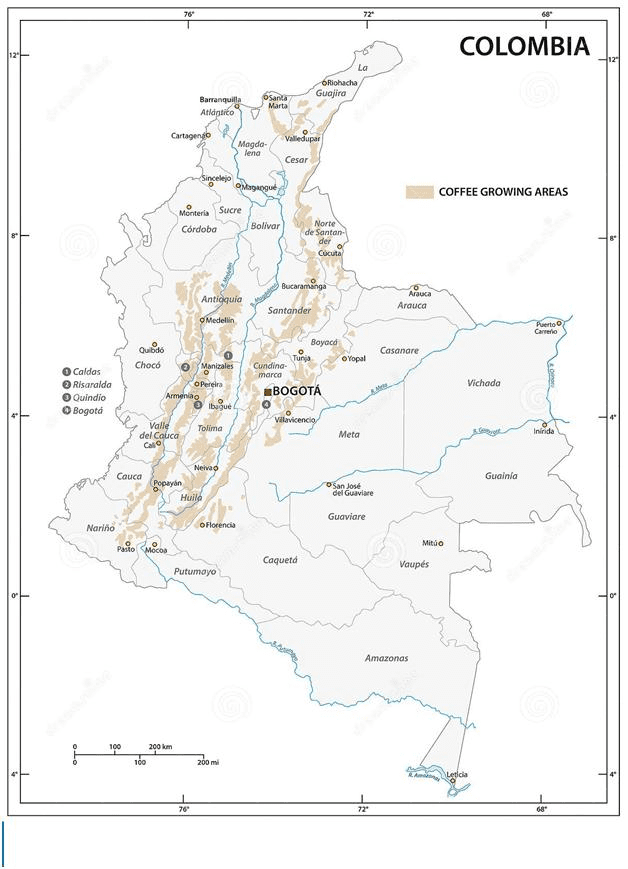
Colombia is one of the world’s largest producers of coffee, with only Brazil and Vietnam producing more beans per year. One of the countries key exports, coffee production, is centred around its more mountainous regions, which span the centre of the country. The map below visualises the most common areas of coffee production. While environmental factors may affect the harvest for the year and overall production, the potential for instability in the region will be a key contributing factor. Colombia faces several key risks which can contribute to regional instability. Warring drug gangs, growing protests and a decades long insurgency by communist guerillas all affect the risk of Colombia’s key commodities.
As these risks can occur, develop and spread at short notice, it is vital to have access to a competent toolkit designed to protect key interests in uncertain regions. Through the use of the Crucible platform, key flashpoints and ongoing situations can be monitored and understood with ease. Crucible contains near real–time data from the Armed Conflict Location & Event Data (ACLED). With each incident geolocated and plotted on the basemap, users can quickly identify key areas of risk and subsequently better protect their interests. As an example, focusing on the Colombian municipality of Popayán and the wider Cauca region, risks to commodities organisations can be immediately identified and understood.
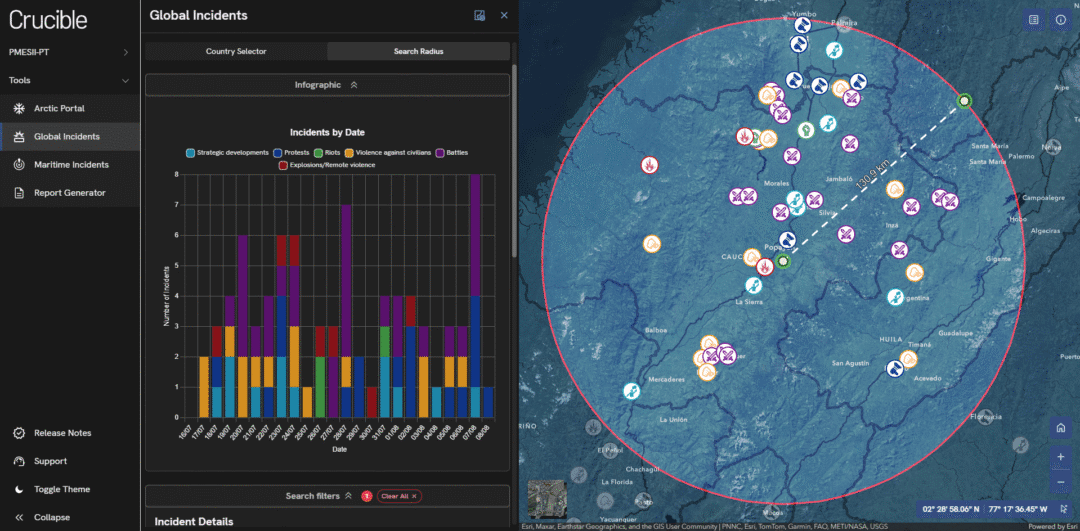
From the 17th July to the 8th August, a total of 82 incidents were identified within the Cauca region and surrounding areas. These ranged from protests against the arrest of a former Colombian president and a kidnapping of an off-duty police officer, to armed battles between Colombia’s military and Revolutionary Armed Forces of Colombia (FARC) guerillas. Splitting the data into specific dates, it becomes clear that on the 7th August there was a notable spike in incidents. These were notably a series of ambushes set up by FARC guerillas against Colombian military personnel.
For a commodity organisation seeking to invest in the coffee industry in Colombia, the ongoing instability in the Cauca region would present a notable risk to effective business operations. Other regions in Colombia, or South America as a whole, may provide less risk for the successful operation of coffee cultivation. Crucible can provide these businesses with up to date, effective and precise incident data to best protect any current or future interests. Instability within South America can occur at a moment’s notice, with large scale protests and violence not uncommon. To be best protected from this instability, businesses and organisations will need to adopt competent systems such as Crucible to stay informed of any risk of operations, from small scale protest action all the way up to significant armed conflict.
ECONOMIC ANALYSIS
In the past decade many countries in South America have experienced sustained economic growth. Following the global economic slowdown after the Covid pandemic in 2020, these South American nations have sought to diversify their economies, opening up new markets and prioritising growth. Instability in the region can still hinder this growth, with spikes in regional crime levels often being a key factor in any economic slowdown.
For any business or organisation seeking to understand the best location in the region for investment, Roke’s Crucible platform provides up to date economic analysis of countries. Easily accessible, users can identify trends and find the best location for investment in areas such as commodities.
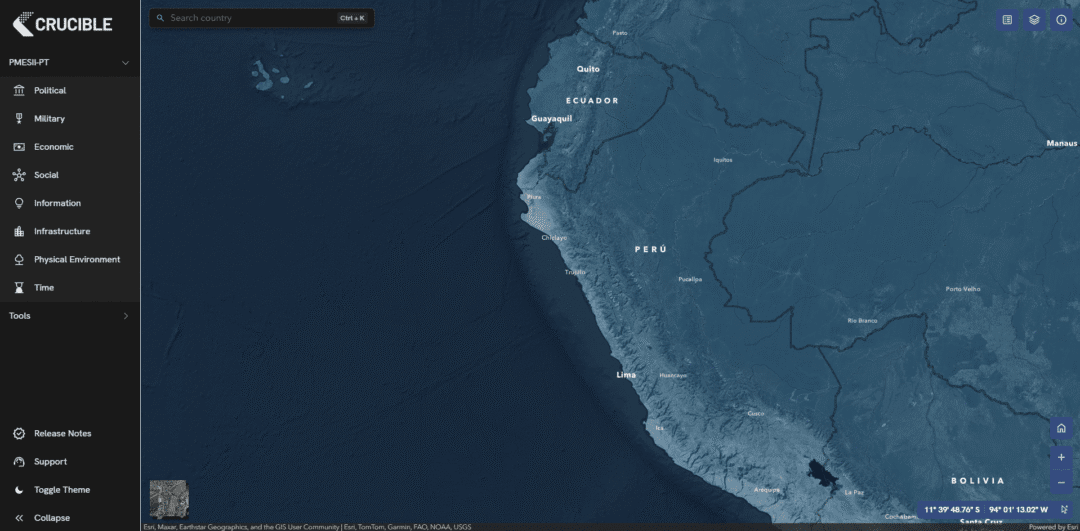
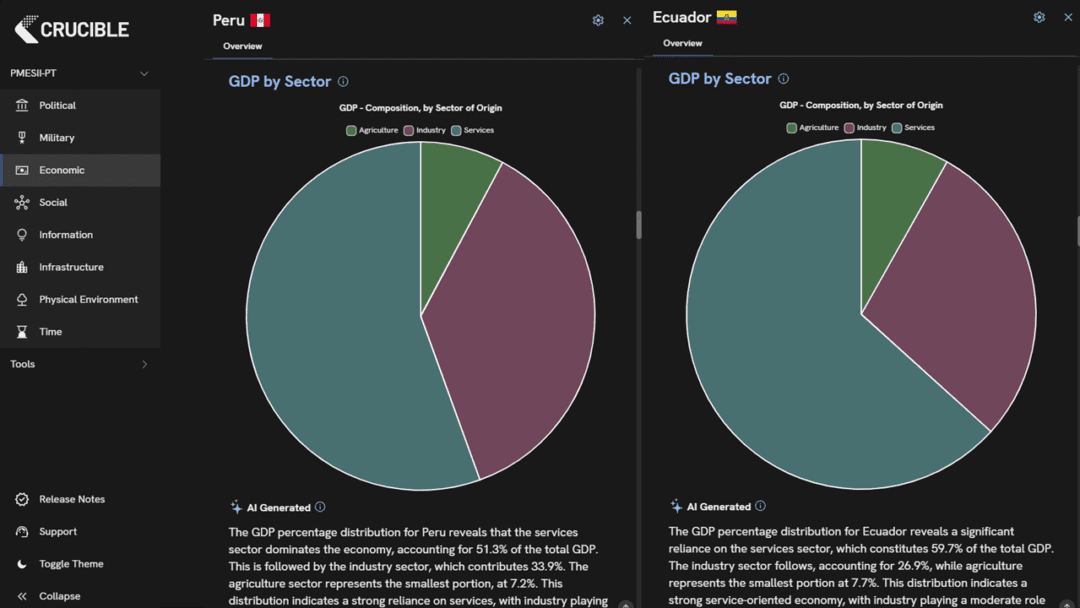
For a business seeking to invest in either Peru or Ecuador, Crucible can be used to understand a variety of factors that showcase the advantages and disadvantages of both nations. At a surface level, the economy of both Peru and Ecuador seem similar. Breaking both nation’s GDP by sector, there is a similar spread of sectors, with services providing the overwhelming majority of GDP for both countries. Peru has a larger industrial sector at 34 % of total GDP, compared to Ecuador’s 27%. Both nations have around 7% of their GDP associated with the agricultural sector. This expansion of both industrial and service sectors is one of the signs of the growth of both nations.
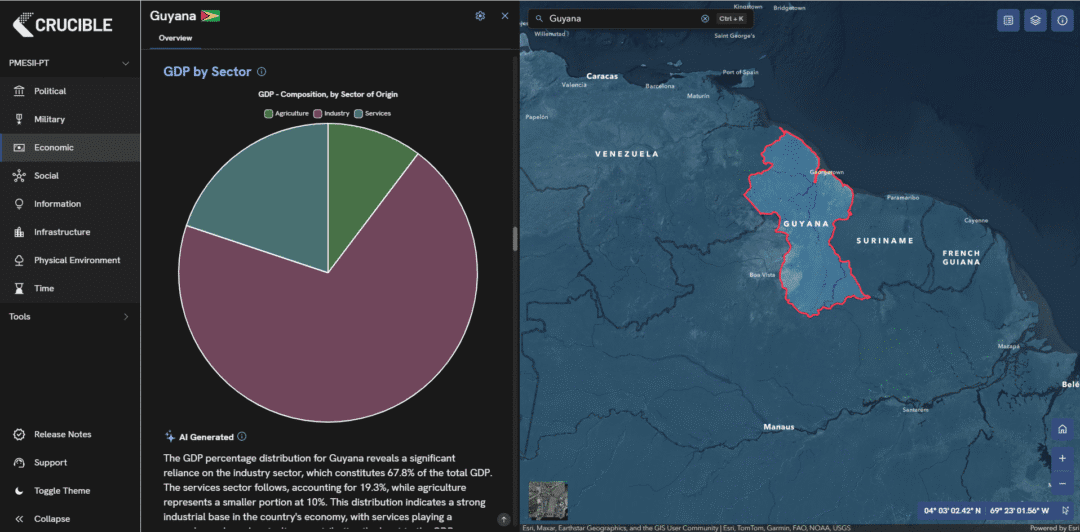
One nation which has struggled more economically is the small South American nation of Guyana. Looking at the spread of each sectors contribution to overall GDP, there is a much lower percentage from the services economy. Instead, almost 68% of Guyana’s economy is from industry. This reliance on industry is likely to impact Guyana’s ability to shift and adapt to market changes, compared to Peru and Ecuador which have a much more balanced economic split.
Examining further into Guyana’s economic data, we can see that a significant degree of poverty is still prevalent in the country. Approximately 28% of population is living on less than $6.85 a day. A further 12% live on less than $3.65, and an additional 6% live on less than $2.15 (this is classed as the international poverty line).
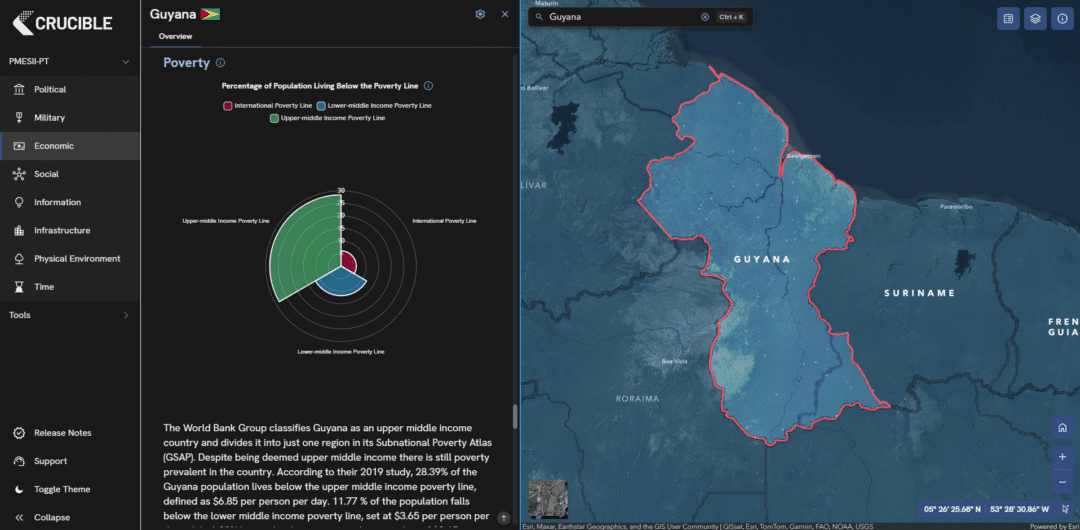
In comparison, both Peru and Ecuador have just over 3% of their populations on the international poverty line, half the percentage amount of Guyana. Further economic comparison tools, such as unemployment rates, government net lending/borrowing and inflation rates are all available within the Crucible platform. For a business seeking to invest in a new area of operations, Crucible can provide an easy to use platform, designed to enable rapid business decisions in a rapidly evolving world.
ENVIRONMENTAL OVERVIEW
Commodities such as coffee can be significantly affected by risks such as adverse weather conditions and natural disasters. South America as a whole faces’ numerous environmental challenges. Floods, droughts, earthquakes, landslides and wildfires can all occur within the continent.
For any business seeking to invest in the region, having knowledge of the risk of these threats is essential to maintain operations. Through the use of Crucible, the threats of natural disasters can be easily visualised and displayed within the platform.
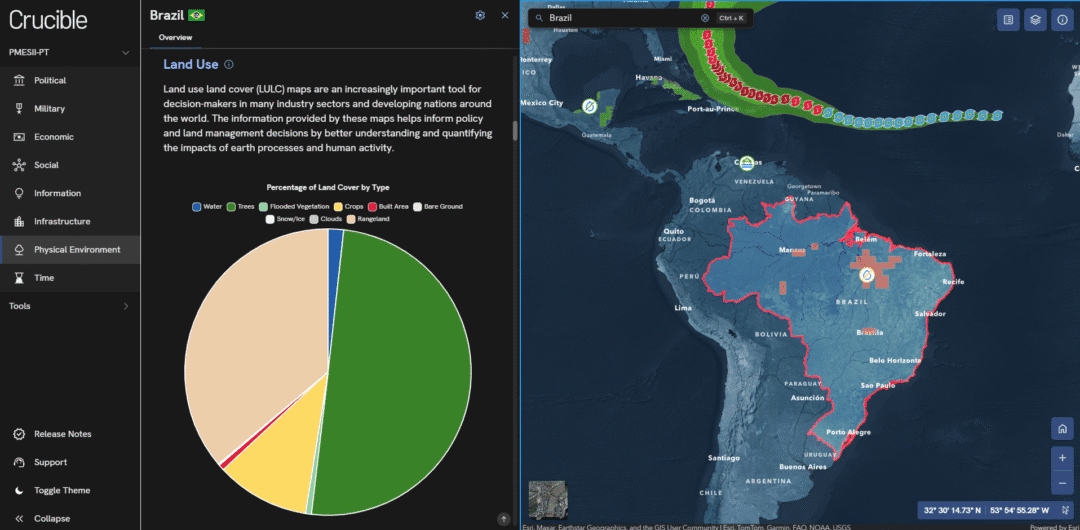
Crucible has up to date land use cover maps for every country, breaking down the percentage of land cover by type such as crops, built up areas and wooded areas. For commodities companies, this information is crucial to easily determine the feasibility of any investment. From looking at environmental conditions in August 2025, we can see that while Brazil and the rest of South America shouldn’t be affected by the upcoming cyclone Erin, the path of which is visualised with the highest risk areas easy to identify.
However, there is a lesser risk of drought occurring in the region. Countries such as Brazil are facing sustained periods of drought, which will have an impact for a commodity such as coffee. Sustained periods of drought can also dry out vegetation, leading to an increased fire risk. In the screenshot below, the fire and thermal anomaly layer has been displayed to represent this risk.
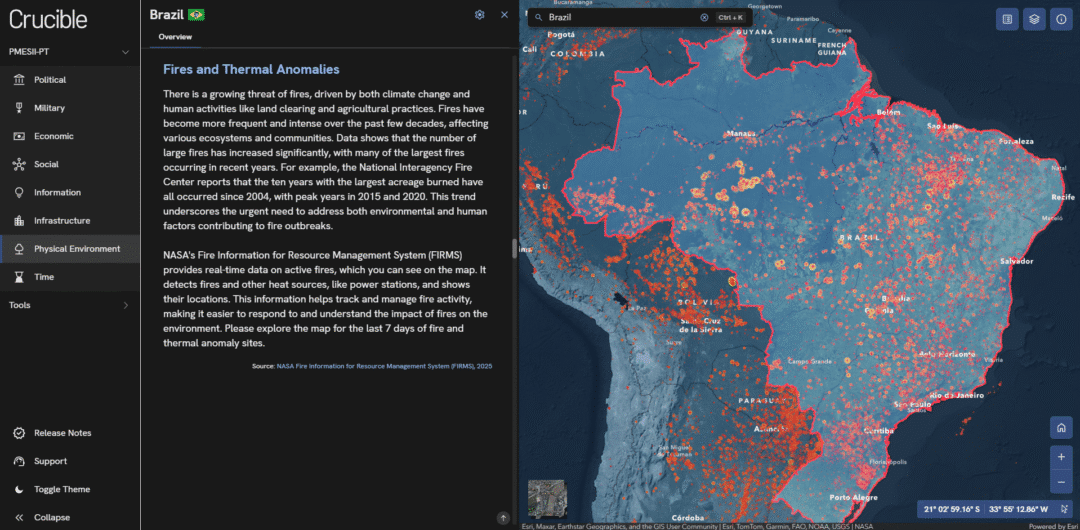
Through the use of the fire and thermal anomaly layer, we can immediately begin to identify the most at risk areas for wildfires within countries such as Brazil. There is notably a large concentration of reported fires in the northeastern section of Brazil, where in the previous screenshot there was the identified risk of severe drought. Dry vegetation and the high risk of fire has the potential to seriously impact farmland and associated comodities. Coffee production would be seriously impacted in such an area, with insufficient land to cultivate sufficient crops.
With unpredictable weather conditions set to increase in the coming years, it is essential for businesses and organisations to adopt up to date and comprehensive ways of protecting key interests. For goods such as coffee, using a platform such as Crucible will enable businesses to get actionable information as to what areas of risk might impact business. Any developing adervse weather conditions are all acessible in the platform, with users able to easily track these events and understand how their business may be impacted.