THE BALANCE IN THE BALTIC
The Baltic countries form NATO’s most exposed border and hold significant strategic importance for both NATO and Russia, due to their geographical location and security implications. For Russia, the region represents an area of strategic vulnerability and of historical loss of influence after the Soviet collapse, access to the Baltic sea and the closed-off enclave of Kaliningrad. For NATO, the Baltic symbolises the commitment to collective defence and deterrence under article 5 and serves as a frontline in protecting Europe from acts of aggression.
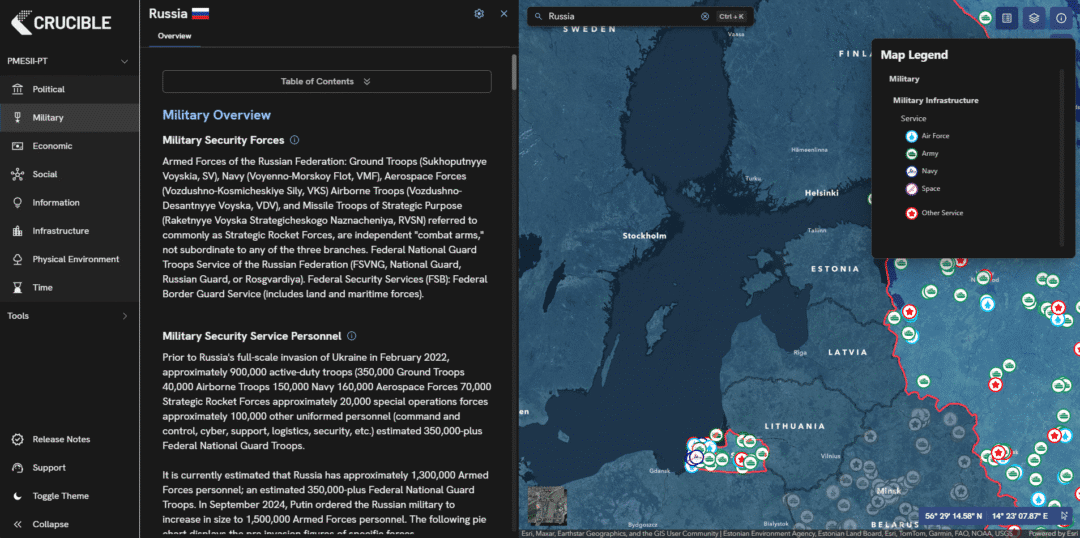
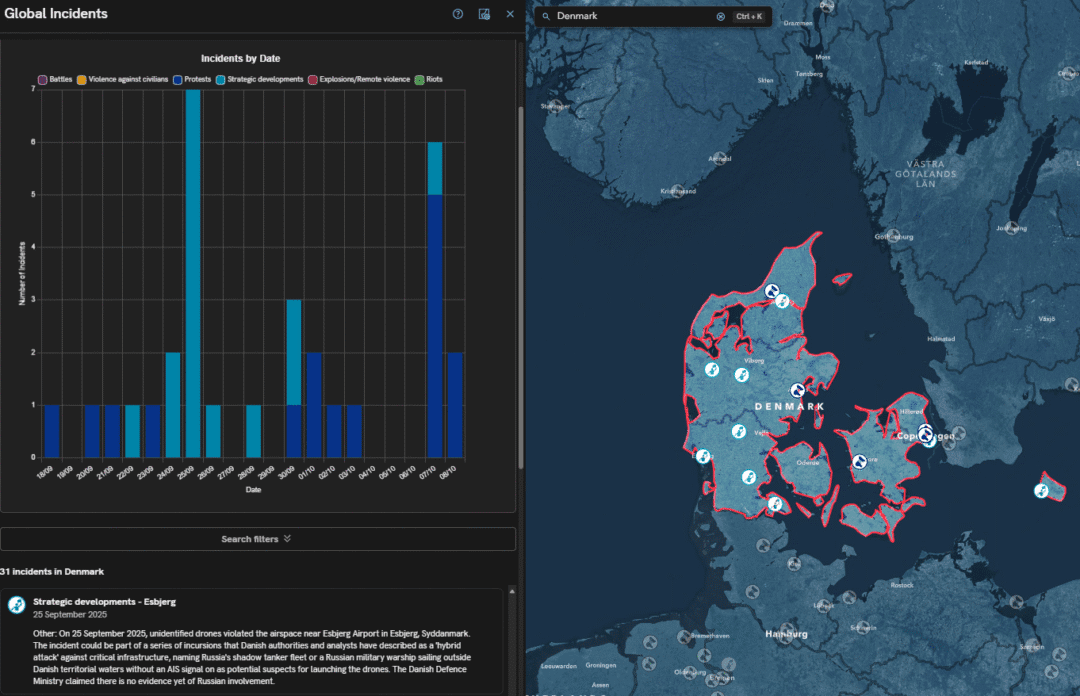
Throughout September and October 2025, airspace tensions grew in the Baltic countries after a rise in unidentified drone incursions and manned aircraft violating airspaces. This renewed NATO concerns about Russia’s increasingly unpredictable behaviour towards the Baltic states.
These have included drone incursions in the vicinity of civilian and military airports or military facilities, causing temporary airport closures in Denmark, Sweden, Norway, Lithuania, France, Germany and Belgium. In response to these incursions, NATO launched Operation Eastern Sentry on 12th September to strengthen its eastern flank, a move welcomed by Baltic leaders as a step towards enhancing regional security.
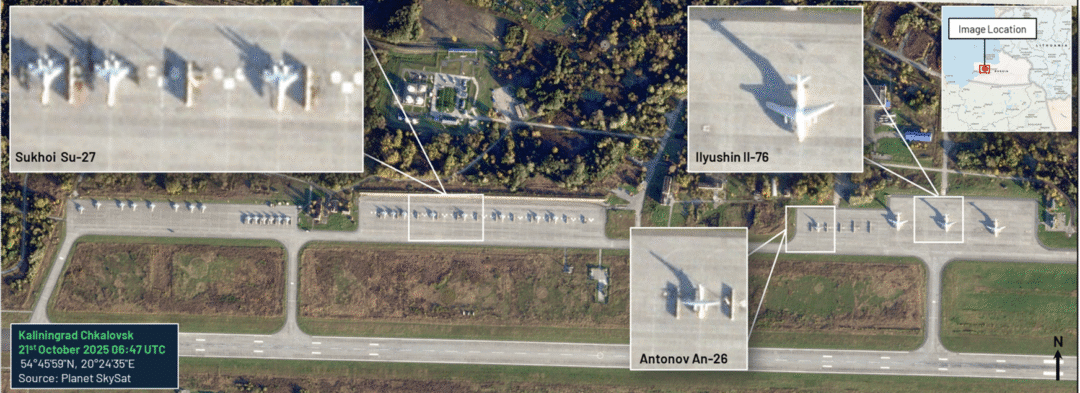
Notable airspace violations were similarly observed by aircraft. One of the most significant incidents occurred on 19th September, where three Russian MIG-31 jets entered Estonian airspace resulting in consultations and Estonia issuing a formal warning to Russia. This additionally led to an EU parliament resolution on 9th October 2025 that encouraged initiatives enabling EU states to take reasonable action against airspace violations. This includes amendments to legislation on using force to counter drones, the welcoming of the EU’s “drone wall” and Eastern Flank Watch initiatives.
The Russian Ministry of Defence has consistently denied the reports of airspace violations, stating that on 19th September, fighter jets were on a scheduled flight from Karelia to an airfield in the Kaliningrad region and were in strict compliance of international airspace regulations.
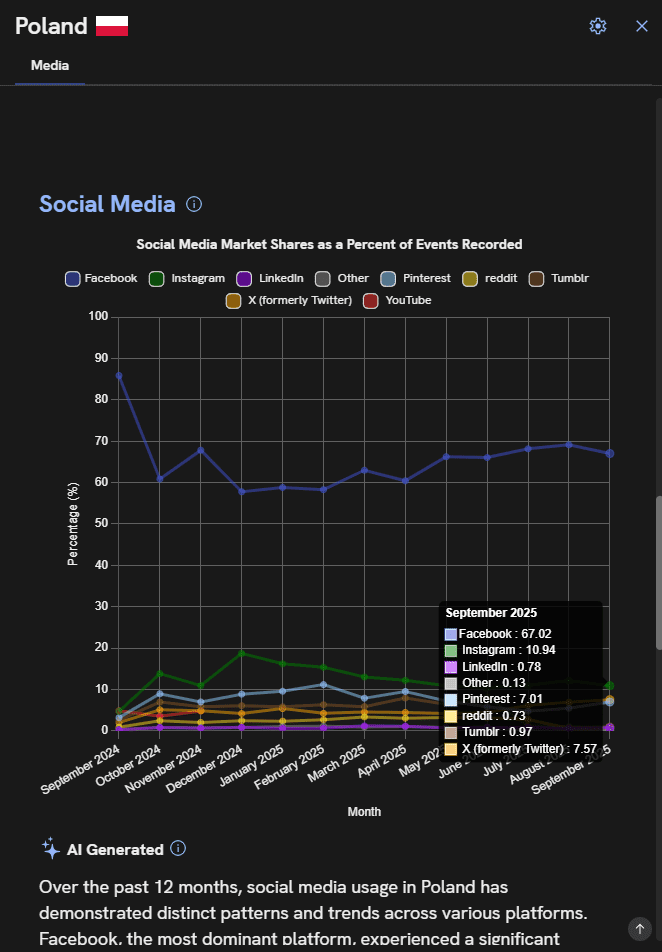
Beyond direct incursions, governments have warned of a wider hybrid campaign of coordinated messaging aimed to exploit these violations and undermine NATO capability. These have included Pro-Russian narratives intensifying in Poland, specifically via Facebook (the most used social media within Poland). The narrative centres on the idea of not letting Ukraine ‘drag’ Poland into the war. This indicates a coordinated effort to harness fears of a broader conflict with Russia, while simultaneously undermining EU and NATO solidarity and reducing public support for defence initiatives.
The use of coordinated media narratives alongside the growing airspace tensions underscores Russia’s integration of further ‘grey zone’ tactics into its broader security posture, with the likely aim being less overt confrontation and more targeted at undermining allied cohesion, public confidence in NATO’s deterrence and the credibility of the European defence sector, ultimately reducing the commitment of support in Ukraine.
HIGH NORTH: COOPERATION OR COMPETITION?
After Russian drones entered Polish airspace between the 9th and 10th September, shortly after, Russia began the joint strategic exercise Zapad 2025.
Due to Russia’s commitment in Ukraine, fewer Russian troops were involved, but the exercise included military contingents from Belarus, Burkina Faso, India, Iran, the Democratic Republic of the Congo (DRC), and Mali. It highlighted the Russian-Belarusian capability to conduct large-scale, multi-domain operations, including that of potential nuclear deployments.
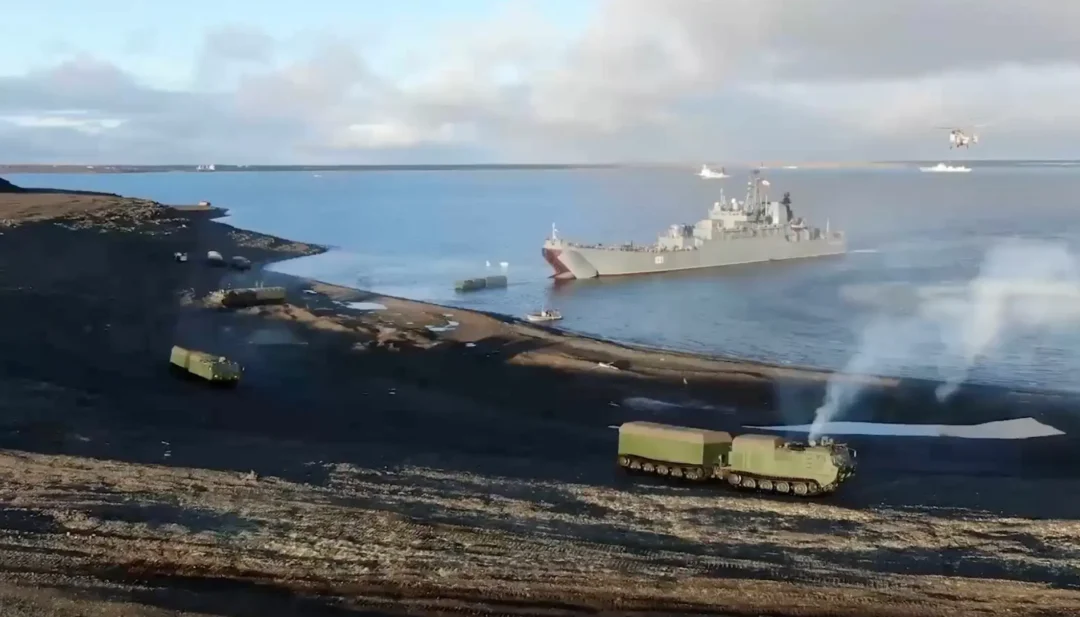
The exercise occurred over multiple locations and domains including the Arctic and incorporated scenarios of a large-scale aggression by western countries towards Russia. The inclusion of these multiple domains and varied scenarios, such as the Russian Northern Fleet conducting a tactical landing of naval troops on the unprepared coast of Alexandra Island in the Arctic Ocean, likely serves as a demonstration of Russia’s intent to assert control over the High North.
Since the end of the Cold War, the eight Arctic states (Canada, Denmark, Finland, Iceland, Norway, Russia, Sweden and the United States) have collaborated on issues such as sustainable development, environmental protection, and scientific research, maintaining a shared commitment to peace and stability.
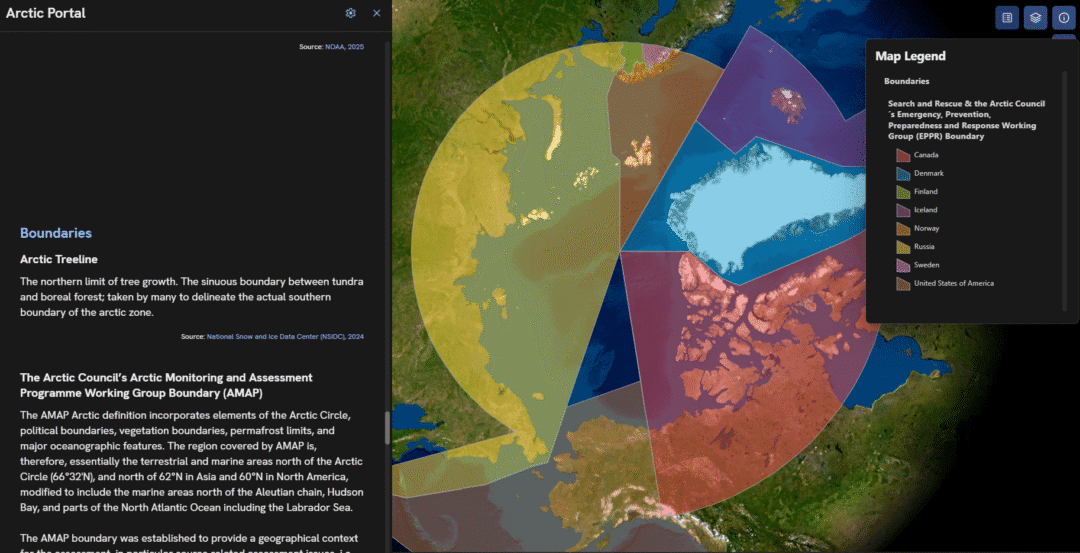
This cooperation has largely been facilitated through intergovernmental forums like the Arctic Council. However, this collaboration has been increasingly under friction as the region gains greater strategic importance for major global powers and following Russia’s suspension due to the Ukraine conflict. This rise of Arctic significance, driven by the effects of climate change, has the potential to open trade routes and access to natural resources such as oil and gas and critical minerals such as platinum, palladium and nickel. These critical minerals have a wide array of military uses. With recent decisions to increase NATO defence spending, this will likely translate into a higher demand for critical minerals including platinum group metals (PGMs) which include Platinum and Palladium.
Due to major geopolitical changes, new strategic approaches have been developing throughout 2025, changing the high north from a region of cooperation into a venue of strategic competition. This can be seen in recent actions by the US with a renewed interest in Greenland, the signing of memorandum to authorise the purchase of icebreaking ships from Finland and executive orders with aims to maximise the development of Alaska’s natural resources.
In comparison, China, who has declared itself as a near-arctic state, has increased cooperation with Russia in the opening of future maritime trade routes focusing initially on the Northern Sea Route (NSR).
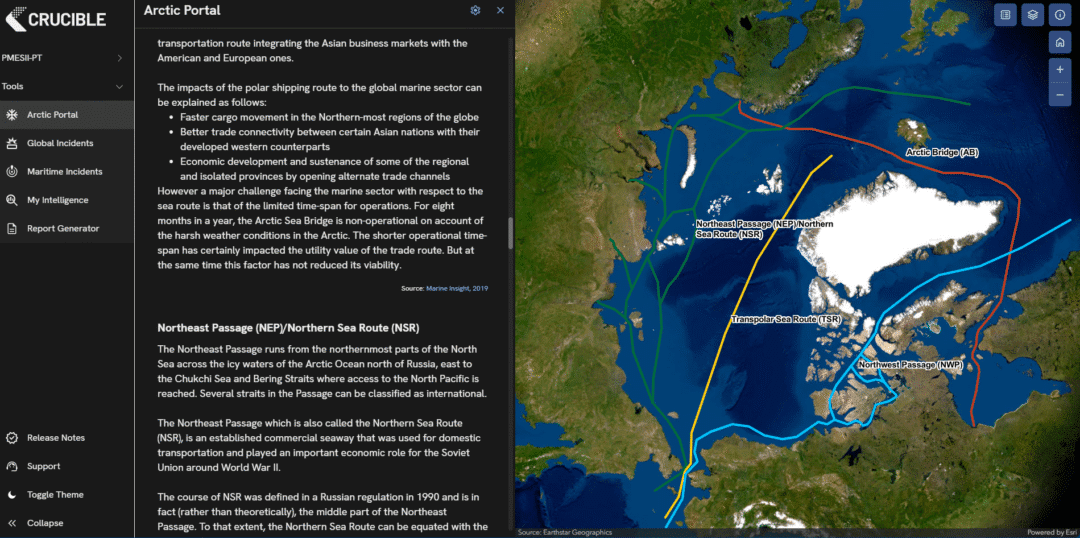
Russia’s Arctic trade is heavily reliant on its close partnership with China, the primary destination for shipments along the NSR. In 2024, an estimated 95% of east-to-west cargo transits across the NSR were exports from Russia to China.
This trade flow not only highlights the strategic importance of Sino-Russian relations in Arctic logistics but also represents a significant economic lifeline for Russia. The NSR enables Russia to monetise its vast natural resources (particularly oil, gas, and minerals) by reducing shipping times to Asian markets. As Western sanctions continue to restrict Russia’s access to European trade, the NSR-China corridor has become a critical revenue stream, helping to stabilise Russia’s export economy and support infrastructure investment in its northern regions.
BALTIC & HIGH NORTH: ENERGY & INFRASTRUCTURE – THE NEW FRONTLINES
With the increasing pressure from western sanctions, fears have amplified over the risk of sabotage, espionage and other hybrid actions from Russia targeting western critical infrastructure, including that of underwater infrastructure, LNG terminals and supply lines.
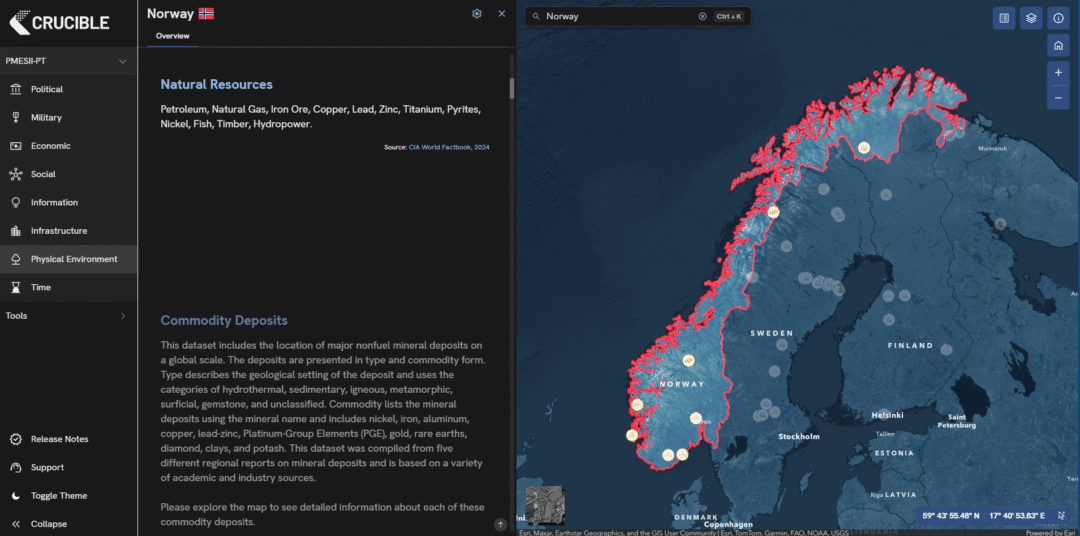
Europe’s network of pipelines, power cables and gas terminals play a vital role in supporting the UK’s energy sector. Although the UK is no longer part of the European Union, its energy system remains closely tied to the continental infrastructure. Among the UK’s European partners, Norway stands out as a particularly important partner and supplier.
Norway is now Europe’s main source of natural gas, after Russia, since the start of the conflict in Ukraine. Norwegian exports have become critical to the region’s energy stability. Around one third of the UK’s gas imports come from Norway through the Langeled pipeline. The UK has some of the lowest levels of gas storage in Europe, making it vulnerable to short-term supply shocks and high demand periods.
NATO and EU policy makers have highlighted ongoing concerns over the resilience of European critical infrastructure. One major concern is that a significant portion of critical infrastructure is privately owned. While security is becoming a major motivation for investment; shareholders have prioritised efficiency, creating interconnected systems where one failure can cascade into crisis.
One prominent example of how these supply disruptions can have a knock-on effect is the 2022 Nord Stream explosion which caused an immediate impact on the supply of natural gas from Russia into Europe. This caused a dramatic spike in European gas prices, which had the potential to trigger an economic slump and lead to recession.
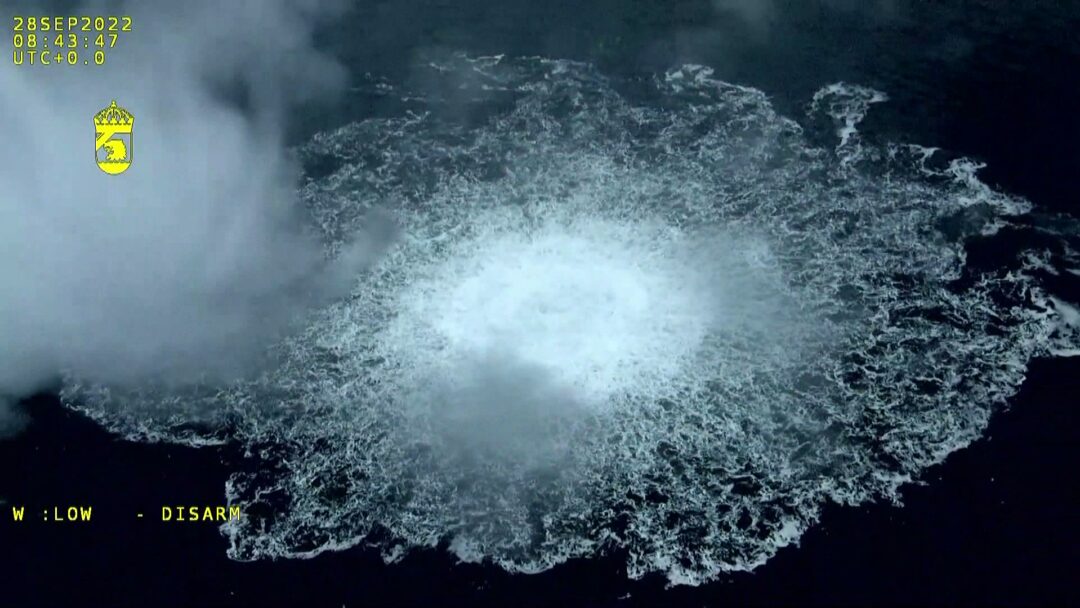
This issue is not limited to gas supplies; underwater cables are also a crucial infrastructure that support the global economy, defence and communication systems. Modern subsea cables have the capacity to carry hundreds of terabits per second, surpassing the capacity of satellites. When issues occur with these cables, the origin of this disruption can be difficult to detect, easily denied and have dramatic consequences.
Since the start of the Ukrainian conflict, GPS and GNSS manipulation has increased in countries surrounding Russia and in areas such as the Baltic Sea. Such interference increases the difficulty to accurately track or identify ships in affected areas, complicating efforts to determine presence of vessels when suspicious damage occurs.
Russia has long invested in advanced Electronic Warfare (EW) capabilities, which include the ability to jam and manipulate satellite navigation signals, with the aim to disrupt situational awareness. These capabilities have continued to develop throughout the Ukraine conflict and include the construction of a Circularly Disposed Antenna Array (CDAA) within Kaliningrad. This military-grade antenna array is designed for radio intelligence and has a long-range capability. This could not only monitor communications in Ukraine and NATO countries but has the potential to disrupt satellite navigation systems used by drones, airplanes and ships.
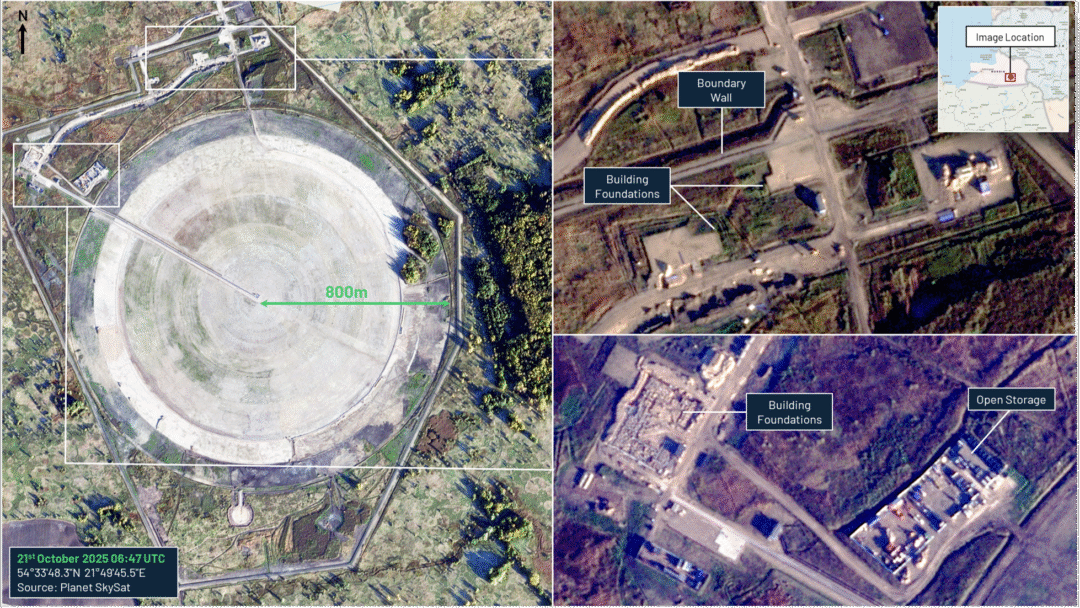
This capability along with the growing pattern of Russian activity, ranging from GPS manipulation and drone incursions across Europe to disinformation campaigns on social media, highlight the breadth of hybrid warfare tactics. This hybrid campaign likely aims to undermine trust in NATO, obscure accountability and test the resolve of NATO countries.
The integration of civilian and military systems in defence and security, results in commercial companies being also present within this hybrid threat environment. With this convergence, the demand for stronger collaboration of defence industries and governments to protect critical research and supply chains is critical.
If you think Crucible could support your organisations operations, get in touch with us now to find out more or run a trial.