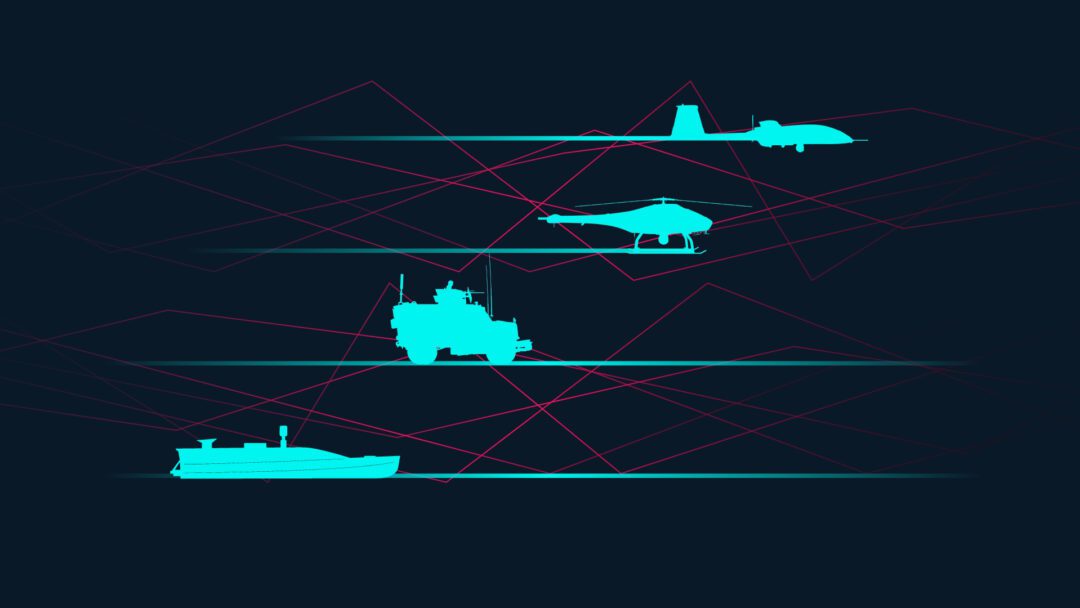
RECENT CONFLICTS IN UKRAINE AND THE MIDDLE EAST HAVE EXPOSED THE GROWING VULNERABILITY OF GLOBAL NAVIGATION SATELLITE SYSTEMS (GNSS), BRINGING INTERFERENCE, JAMMING AND SPOOFING INTO SHARP FOCUS.
Researchers have linked GPS disruption across parts of Europe to Russian satellite activity, highlighting a reality that extends far beyond active conflict zones: navigation threats can now originate hundreds or even thousands of miles from their target. The consequences are already being felt across military operations, commercial shipping, and critical infrastructure.
As military forces and commercial companies have worked to protect their assets, one lesson has become increasingly clear: there is no single solution to the growing range of navigation threats. The realities of modern conflict demand a more nuanced approach, one that recognises different operational environments, threat profiles and mission requirements. Building resilient Positioning, Navigation, and Timing (PNT) requires a fundamental shift in how resilience is designed, delivered and maintained.
To understand what effective resilience looks like, we must first examine how positioning and timing have been affected in recent conflict.
In Ukraine, Electromagnetic Warfare (EW) has become a persistent feature of frontline operations, with GNSS disruption impacting everything from tactical drones to precision-strike systems. The effects are often highly localised with units operating in one area experiencing markedly different navigation conditions. Moreover, the threat environment is far from static. Jamming, spoofing and other forms of interference evolve continuously as adversaries adapt their tactics, creating a constantly shifting challenge for operators on the ground.
The conflict in the Middle East, by contrast, has highlighted the vulnerability of maritime routes, commercial shipping and military operations across a much broader geographic area. Here, the challenge is not navigating a contested battlefield but maintaining confidence in positioning and timing across some of the world’s most strategically important waterways. The disruption of these services has demonstrated how dependent both military and commercial operators remain on reliable navigation data.
Together, the conflicts in Ukraine and the Middle East underscore the critical importance of resilient navigation in modern warfare, while exposing the fragility of many systems that continue to rely heavily on GNSS. Recent reports of GPS disruption affecting parts of Europe have further reinforced that this is not solely a battlefield issue. It is a wider challenge for military forces, commercial operators and critical infrastructure alike.
FROM PLATFORM PROTECTION TO MISSION ASSURANCE
Historically, effective GNSS protection has been reserved for a relatively small number of high-value platforms, such as fighter aircraft and attack helicopters. Advanced Controlled Reception Pattern Antennas (CRPAs) have provided robust protection against jamming and interference, but their size, weight, power and cost constraints have limited deployment across the wider force. Lower-cost alternatives have often struggled to counter modern threats, and in some cases, have introduced additional supply chain and security concerns.
The result is uneven resilience landscape. While some platforms can continue operating in contested environments, many others remain vulnerable to disruption.
As GNSS interference becomes a routine feature of modern conflict and commercial assets increasingly find themselves exposed to similar threats, this disparity represents a significant operational risk. For both military and commercial operators alike, navigation resilience can no longer be confined to a select few high-value assets – it must become a capability available at scale.
THE MISSION DEFINES THE REQUIREMENT
What the conflicts in Ukraine and the Middle East have also made clear is that the consequences of GNSS disruption are highly context dependent. The impact of losing positioning, navigation and timing services varies according to the mission, platform and operating environment.
Designing for resilience therefore begins with understanding what a mission must continue to achieve when GNSS becomes degraded, denied or untrusted – not simply how long a signal can be preserved.
THE IMPORTANCE OF CRPAS
In a contested electromagnetic environment, maintaining access to trusted GNSS signals remains a fundamental requirement. CRPAs provide an effective layer of protection against jamming and interference, enabling platforms to continue operating when disruption occurs.
Increasingly, however, their value lies not as a standalone capability, but as part of a wider PNT architecture designed to support mission assurance.
To be effective at scale, GNSS protection must be interoperable, scalable and deployable across a broad range of platforms. Advances in Low Size, Weight, and Power (SWaP) solutions are making this possible.
When integrated with alternative sources of positioning and timing data, onboard sensing technologies and wider electronic warfare capabilities, these systems contribute to a layered approach to resilience that can be tailored to specific operational requirements.
The objective is not simply to protect a signal. It is to ensure that critical tasks can still be completed when that signal is degraded, denied or untrusted. Resilience, in other words, should be built around the mission rather than the navigation source itself.

INTRODUCING NAV-SYNC ARMOUR: RESILIENCE, RE-ENGINEERED FOR SCALE
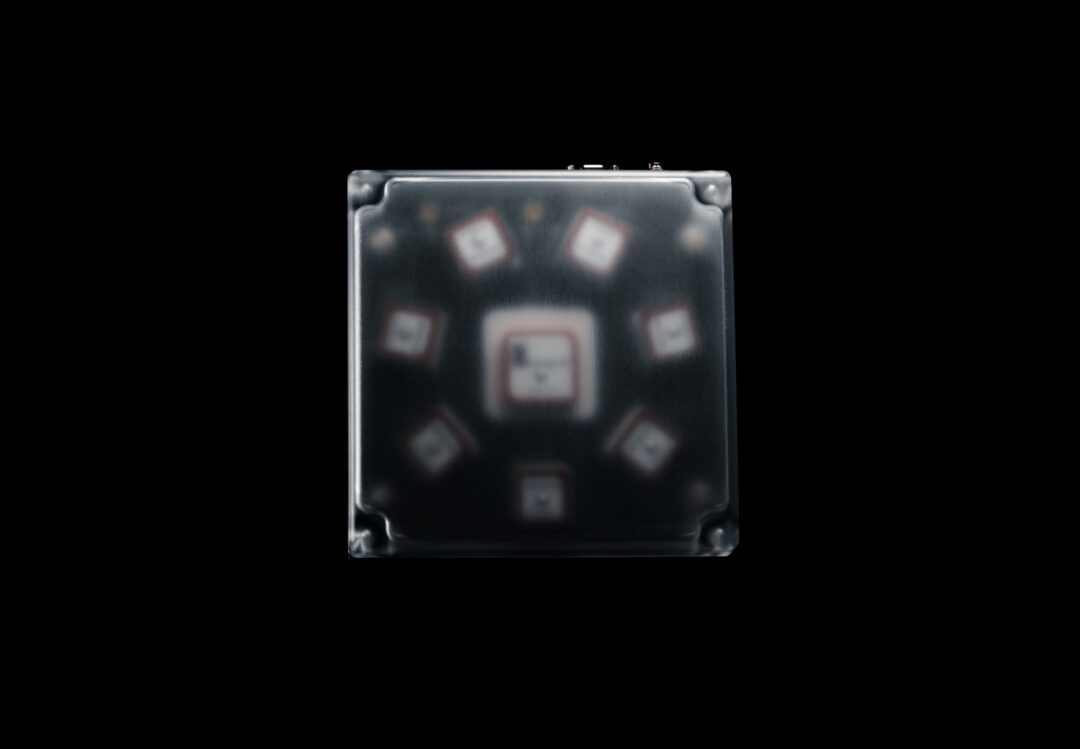
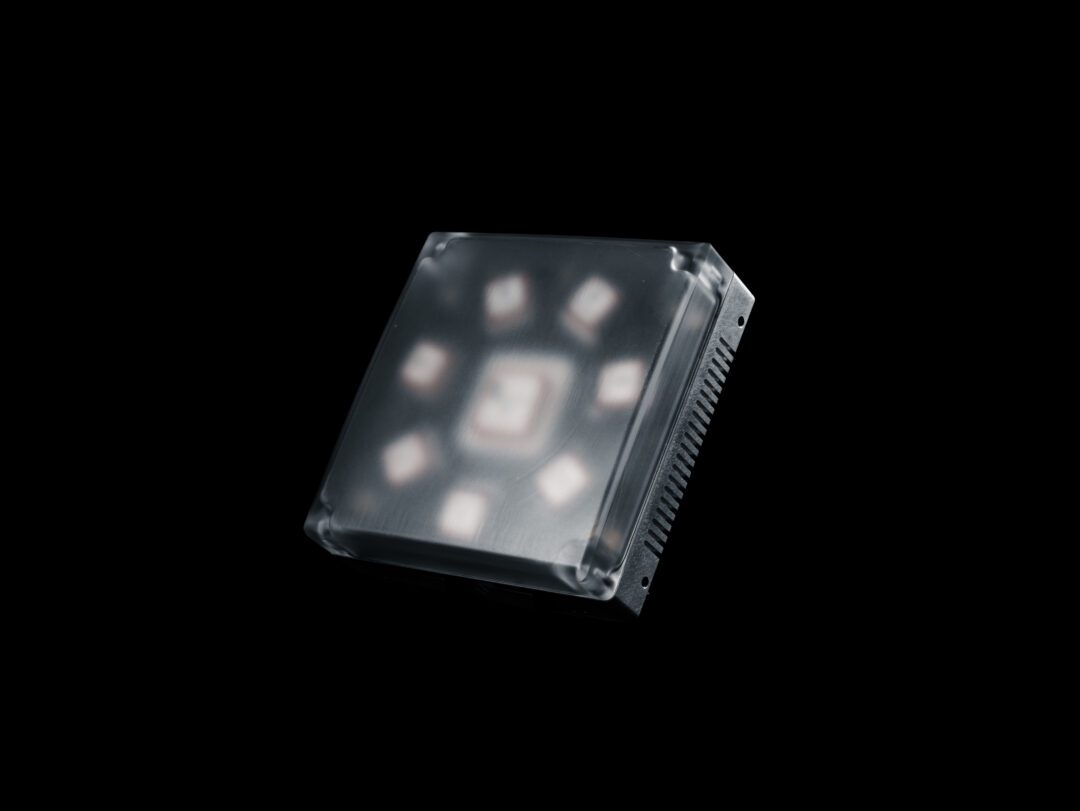
This challenge is precisely why we developed Nav-Sync Armour: a low-cost, military-grade CRPA designed for the realities of modern warfare.
Building on the world’s first anti-jam CRPA, developed in 1984, we have drawn on four decades of experience to create a solution that delivers trusted, resilient and affordable GNSS protection at scale.
Nav-Sync Armour maintains trusted Positioning, Navigation and Timing in contested environments through advanced digital processing that distinguishes authentic satellite signals from interference.
Unlike conventional GNSS antennas, which receive signals indiscriminately, Nav-Sync Armour actively identifies, separates and suppresses jamming sources before delivering a clean signal to the receiver, helping preserve system performance during disruption.
Designed as a direct replacement for traditional GNSS antennas, Nav-Sync Armour can be integrated rapidly with minimal impact on existing platform designs. Its compact form factor and low power requirements make it suitable for deployment across a broad range of military and commercial platforms. As a UK-designed and manufactured solution, it also reduces supply-chain complexity and supports greater deployment flexibility.
More importantly, Nav-Sync Armour reflects a broader shift in how navigation resilience is being delivered. Rather than concentrating protection on a small number of high-value assets, modern PNT architectures must provide scalable resilience across the force.
As part of Roke’s wider Resilient PNT portfolio, Nav-Sync Armour supports a layered approach to mission assurance, enabling operators to maintain trusted positioning, navigation and timing in GNSS-challenged environments through seamless integration with complementary capabilities such as Nav-Sync Pulse.
The goal is not simply to protect a signal, but to ensure missions can continue when that signal is under attack.
DISCOVER ROKE’S RESILIENT PNT PORTFOLIO
Complete the form to speak to an expert or request technical details about Roke’s Resilient PNT Portfolio.

Nav-Sync Armour
CRPA-8 antenna specifically designed to support the proliferation of autonomous platforms across multiple operational areas.

Nav-Sync MRA
Smallest, lightest altimeter in its class, providing precise height measurements for aircraft operations even in challenging conditions.

Nav-Sync Pulse
Achieve terrestrial positioning resilience through ground-based transmitters rather than vulnerable satellites.