Reliable and accurate Positioning, Navigation and Timing (PNT) is crucial to modern warfare.
It enables forces to locate troops, fly drones, guide weapons and navigate vehicles; but also allows systems to synchronise, so that they can communicate, and perform sensing or electronic warfare operations Essentially, PNT is the critical enabler for defence operations.
Most military platforms gather this information from Global Navigation Satellite Systems (GNSS) such as GPS, but recent conflicts have shown just how vulnerable to interference this technology is. If we can’t rely on autonomous platforms going where we expect them to go, or troops to share their location accurately, we are handing adversaries the battlefield advantage. Modern warfare requires a different approach to ensuring PNT resilience.
Ukraine has shown how quickly GNSS vulnerabilities can be exploited. GNSS jamming and spoofing now affect everything from tactical drones and battlefield navigation to precision-strike systems.
This is compounded by the fact that the threat is also constantly evolving and can vary from one location to the next. Interference may be highly localised around a single asset, move with frontline units or disrupt an entire region. Adversaries can continually change their frequencies, power levels, waveforms and tactics, meaning a system that performs reliably in one sector may be ineffective only a few miles away.
The Middle East has demonstrated how GNSS interference can extend beyond the battlefield. Interference has spread across strategically important airspace and waterways, affecting both military and civilian operators, including those far removed from the immediate conflict.
The technology required to cause disruption is also widely accessible. Portable jammers costing a few hundred pounds can be bought online and used to overwhelm the weak signals received from satellites orbiting thousands of miles above Earth. More capable state systems can degrade navigation across entire regions, as we have seen in the Strait of Hormuz.
A multi-layered approach to PNT
Armed forces must, therefore, be able to operate effectively when facing threats ranging from a small jammer concealed near a convoy to sophisticated and coordinated interference across an operational theatre. In this scenario, resilience is made possible through a layered approach.
First, you must be able to actively protect GNSS signals in contested environments. Controlled Reception Pattern Antenna (CRPA) systems have long been the gold standard for resilient navigation, but not always a cost-effective offering for some platforms.
This is a critical area of vulnerability – as a result, a large proportion of assets have been left either exposed to attack or reliant on solutions that struggle to perform in contested environments.
Unlike conventional antennas, which receive signals uniformly from all directions, CRPA systems use multiple receiver channels and advanced digital processing to distinguish between genuine satellite signals and interference, filtering out interference based on its direction of arrival. This means they can suppress jamming sources in real time, while maintaining the integrity of authentic signals.
Roke has been working on this technology for four decades and, through advancements, has been able to create an affordable, low-SWaP solution, meaning that CRPAs are no longer only a viable option for high-value assets and can instead be embedded across the battlefield. That is crucial in today’s frontline, with drones, uncrewed vessels, tactical vehicles and other lower-cost assets increasingly central to surveillance, targeting, logistics and strike operations.

But providing active protection to GNSS is only part of the solution. Resilient PNT must also be supported by independent sources of position and time. These could include a plethora of additional methods, including inertial sensors, terrain matching and ground-based radio systems such as enhanced Long-Range Navigation, or eLoran. Unlike GNSS, eLoran uses powerful, low-frequency transmissions generated on Earth. It is much harder to jam across a wide area and can maintain essential services when satellite signals are unavailable or untrustworthy. Crucially, GNSS and eLoran are dissimilar technologies, that do not share the same vulnerabilities.
The UK Ministry of Defence has realised the potential of this technology and is actively investing in it, with the former Minister for Defence Readiness Luke Pollard MP saying: “In this new era of threat, we are in constant confrontation with adversaries seeking to interfere with our military networks, which are essential to how a military operates in modern warfare. This investment will boost our Armed Forces’ resilience on the battlefield by developing technology to protect them, ensuring that they can continue vital operations protecting UK citizens and allies around the world.”
Building PNT solutions that remain reliable over the long term, requires more than one layer of resilience – based on the ability to combine interference detection, protected GNSS and the optimal fusing of independent and dissimilar alternatives. Only with this layered approach can we achieve real resilience.
Its success should be measured by whether forces can still locate, communicate, manoeuvre and strike accurately when satellite signals are degraded, denied or deliberately falsified.
Related articles
Discover more about Roke’s approach to resilient PNT here.
DISCOVER ROKE’S RESILIENT PNT PORTFOLIO
Complete the form to speak to an expert or request technical details about Roke’s Resilient PNT Portfolio.

Nav-Sync Armour
CRPA-8 antenna specifically designed to support the proliferation of autonomous platforms across multiple operational areas.
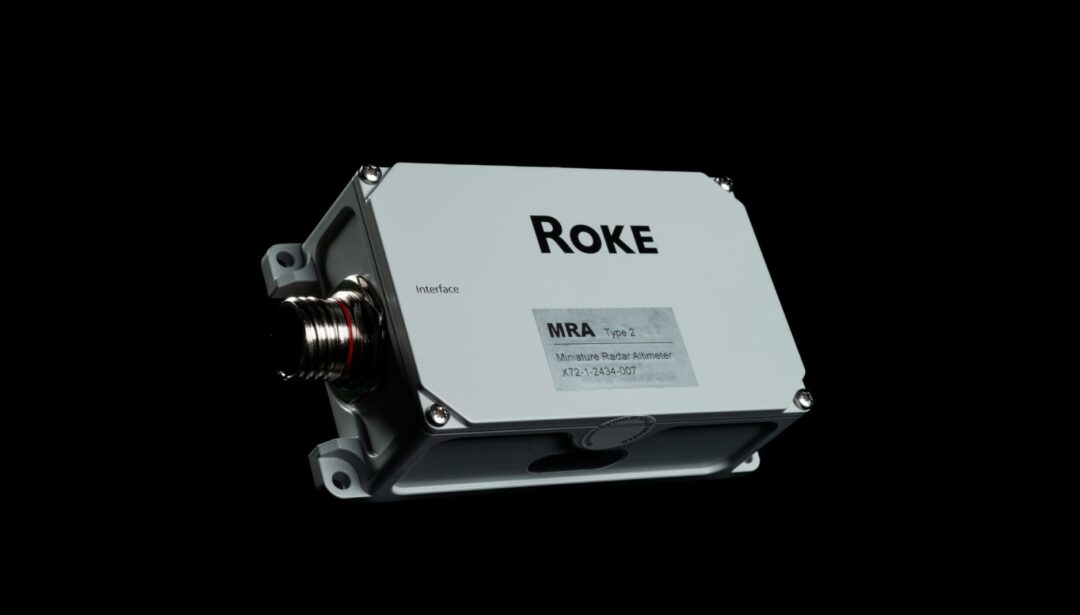
Nav-Sync MRA
Smallest, lightest altimeter in its class, providing precise height measurements for aircraft operations even in challenging conditions.
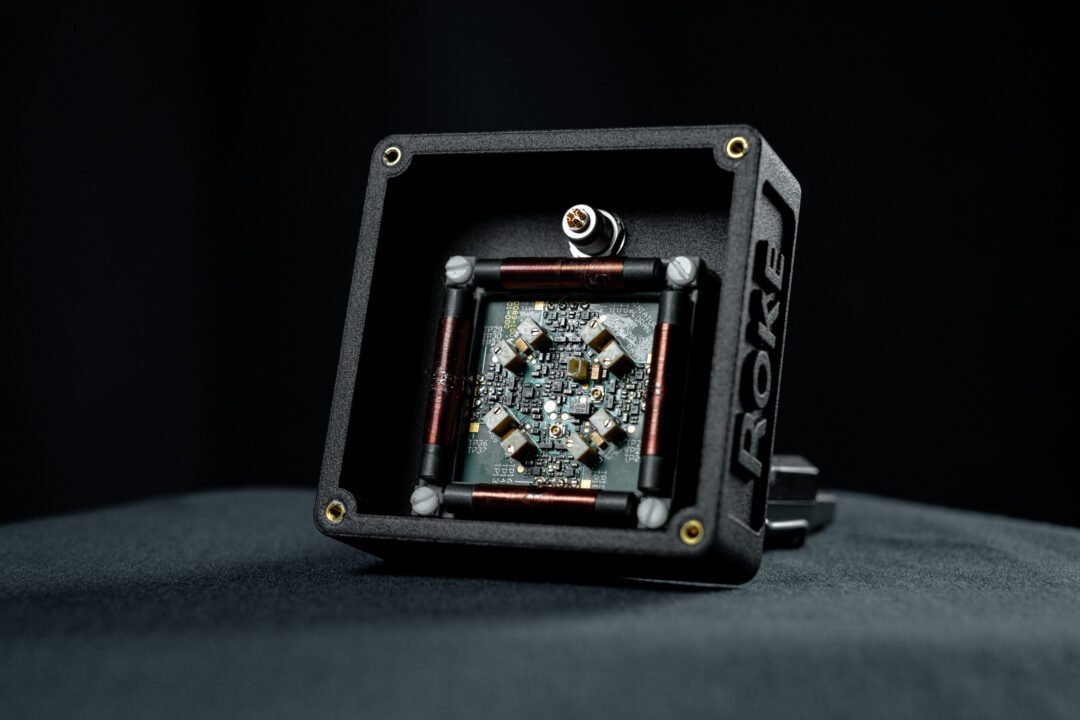
Nav-Sync Pulse
Achieve terrestrial positioning resilience through ground-based transmitters rather than vulnerable satellites.