
Electromagnetic Warfare
Roke is the British technology integrator for defence and national security. We build the Electromagnetic Warfare (EW) products and services that let our customers use the spectrum and deny it to the adversary, in the UK and internationally.
Whoever dominates the spectrum controls the fight.
Every radar, radio, sensor and drone on a modern battlefield depends on the Electromagnetic Spectrum (EMS), which makes control of it as decisive today as control of the air was in 1940. Then it meant flying where our pilots chose while stopping the enemy from doing the same. Now it means keeping our own radars, radios and sensors working while the adversary’s fall silent.
The contest never settles, because every advantage in the spectrum is temporary. Find a way to jam a radio and the manufacturer hardens the receiver, changes the protocol or ships a new model, so a technique that worked last month fails the next. High-intensity war compounds the problem: equipment that took a year to procure can be destroyed in an afternoon, and a system built as a sealed, single-supplier package becomes a paperweight the moment the adversary moves on. Any capability worth fielding has to be replaced, repaired and upgraded at the speed the threat moves.
Roke has worked in the Electromagnetic Spectrum since 1956, the year NATO approved its first policy for the discipline. Seven decades later we are still there, working in the UK and internationally alongside partner technology companies and side by side with our customers, in what remains one of the hardest warfighting domains there is.
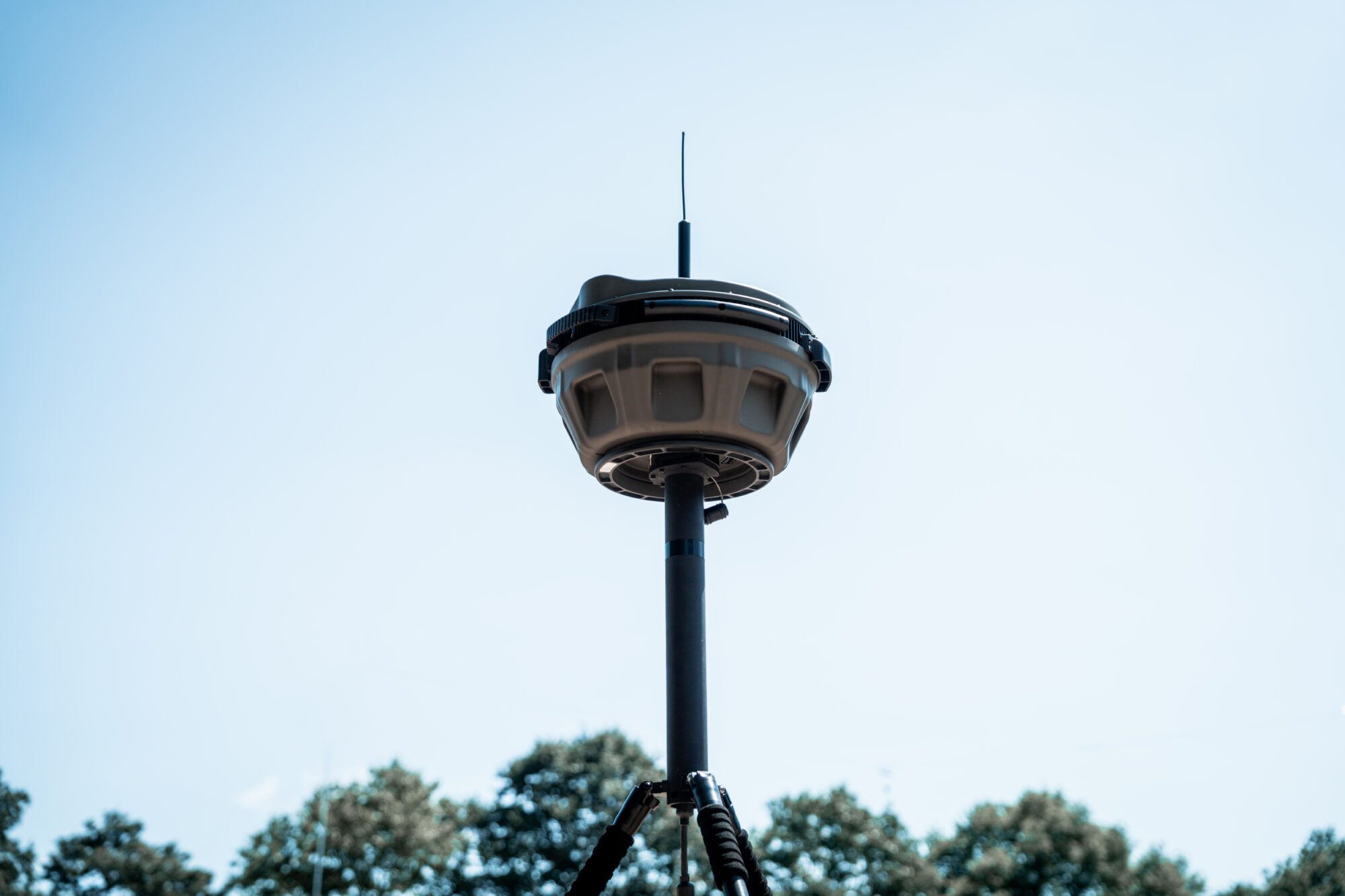
We see the next move before it lands.
Staying ahead in the spectrum starts long before a soldier sets foot on the battlefield, which is why our engineers continuously develop the next generation of hardware and software, anticipating tomorrow’s threats before they emerge. Shaping where the technology goes, collaborating on standards alongside the UK’s community of academia and industry, means the capability already exists when a customer they need it.
That foresight is sharpened by working across defence and national security under one roof. A technique that first used against a hostile signal in a crowded city can surface on a battlefield a year later, and because the same engineers see both, we recognise the pattern early. We build on what we learn, and the thinking that happens in our labs and engineering teams is the same thinking that goes into the kit.

Working technology at the tactical edge.
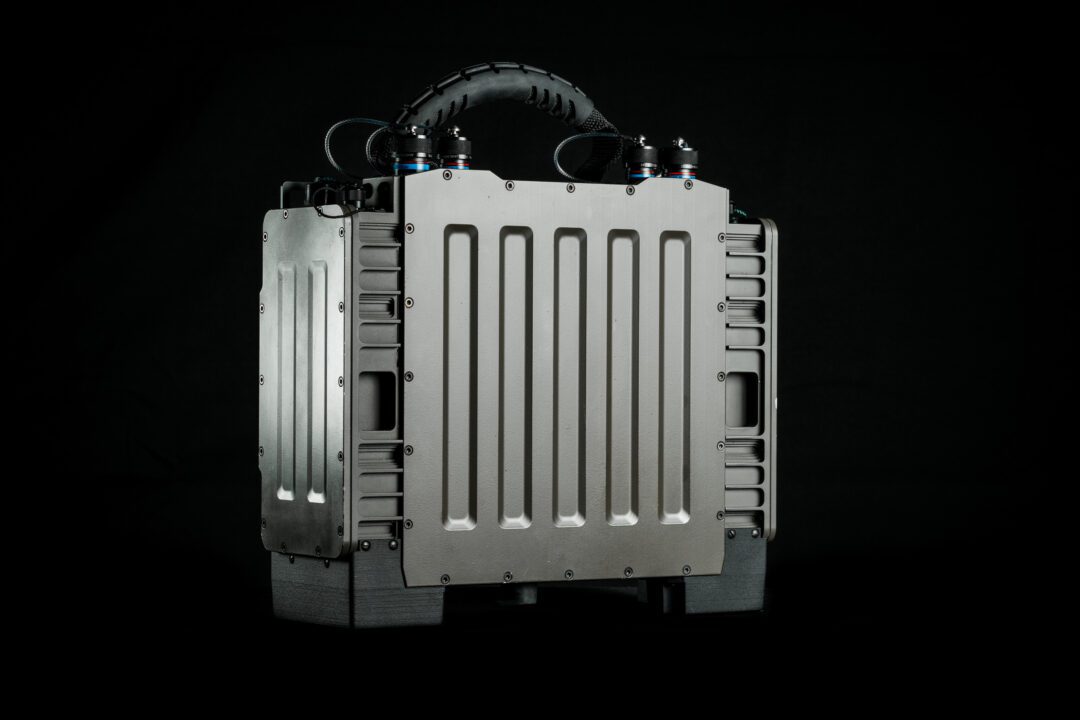
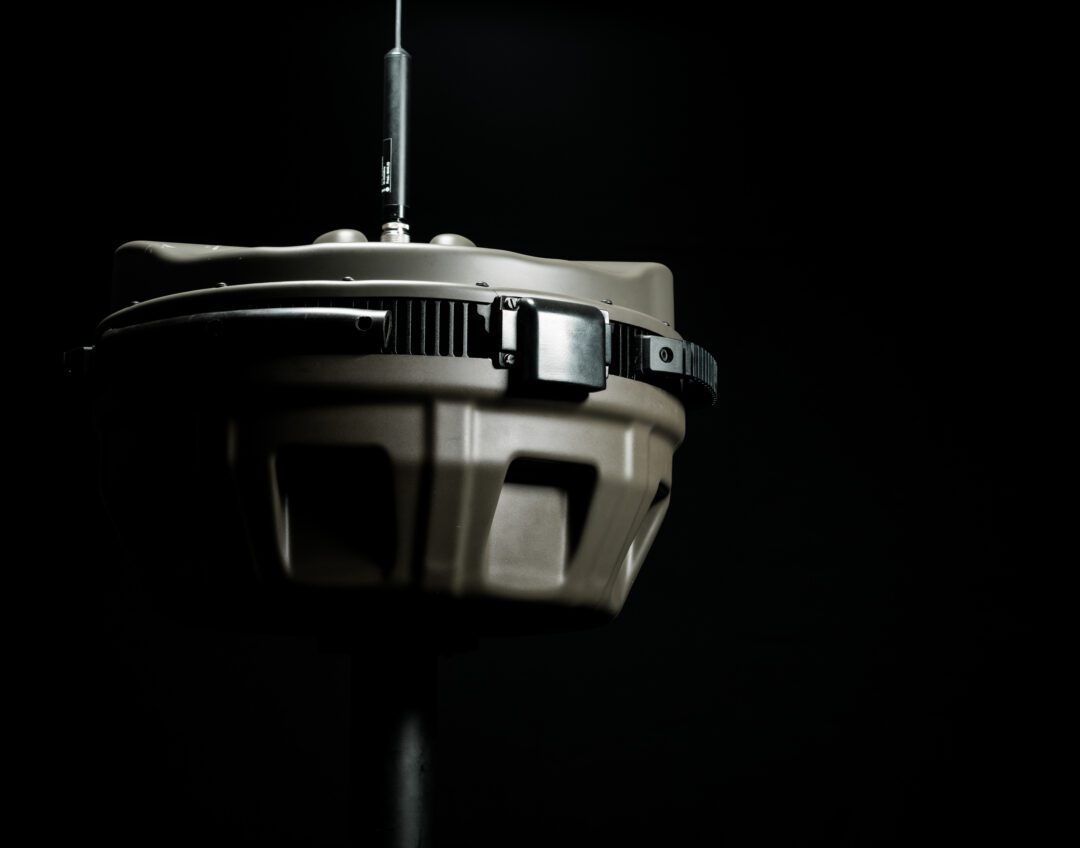
Roke works where EW equipment sits, at the forward edge, or is built into the infrastructure supporting national security operations. From that position we cover the full span of Electromagnetic Warfare, from the simple to the exquisite, and the EM-Vis family is how we deliver it.
-
Electromagnetic surveillance comes first.
Because everything else depends on knowing what is transmitting. EM-Vis Perceive and EM-Vis Resolve find and identify emitters in a crowded spectrum, whether that is an enemy command post, a high-value vehicle or one particular handset picked out of a city’s noise.
-
Direction finding and threat intelligence
Turning a detected signal into something a planner can act on. EM-Vis Locate fixes the emitter’s position and EM-Vis Locate-T builds the intelligence picture around it, so the operator knows where a signal is and what it means.
-
Jamming and Electromagnetic Attack (EA)
Delivering the effect when the mission calls for one. EM-Vis Deceive ranges from overwhelming a signal by transmitting louder than it to protocol-based attack that sends a handheld radio the instruction to switch itself off, with our software-defined radios inside it.
-
Planning and modelling happen before anyone deploys.
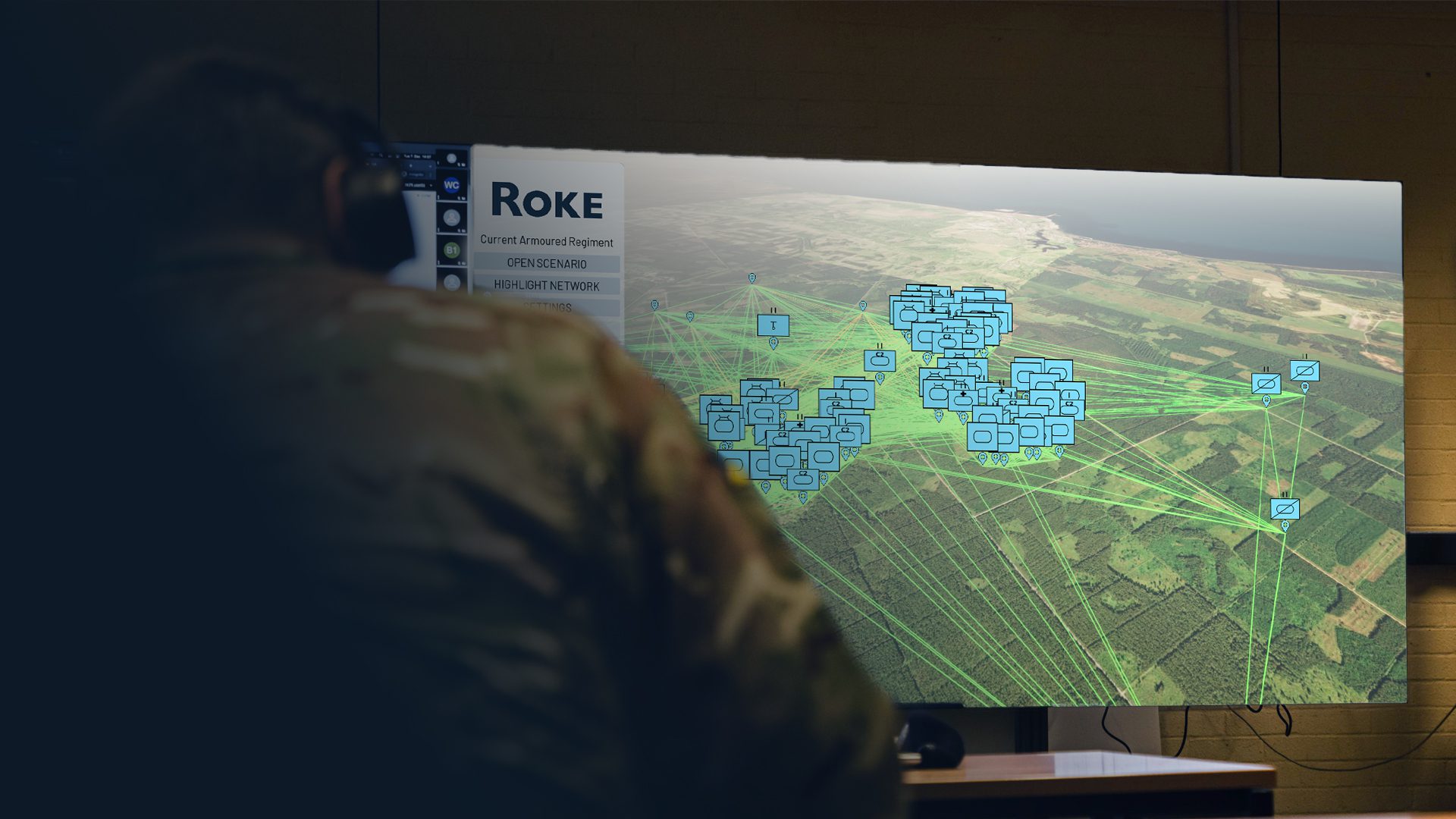
CommsFoundry plans friendly communications in a contested spectrum and models how the network holds up under enemy jamming, while EM-Vis Review supports mission planning and after-action review so each operation informs the next.

Explore Em-Vis


Our approach to EW
Open by design.
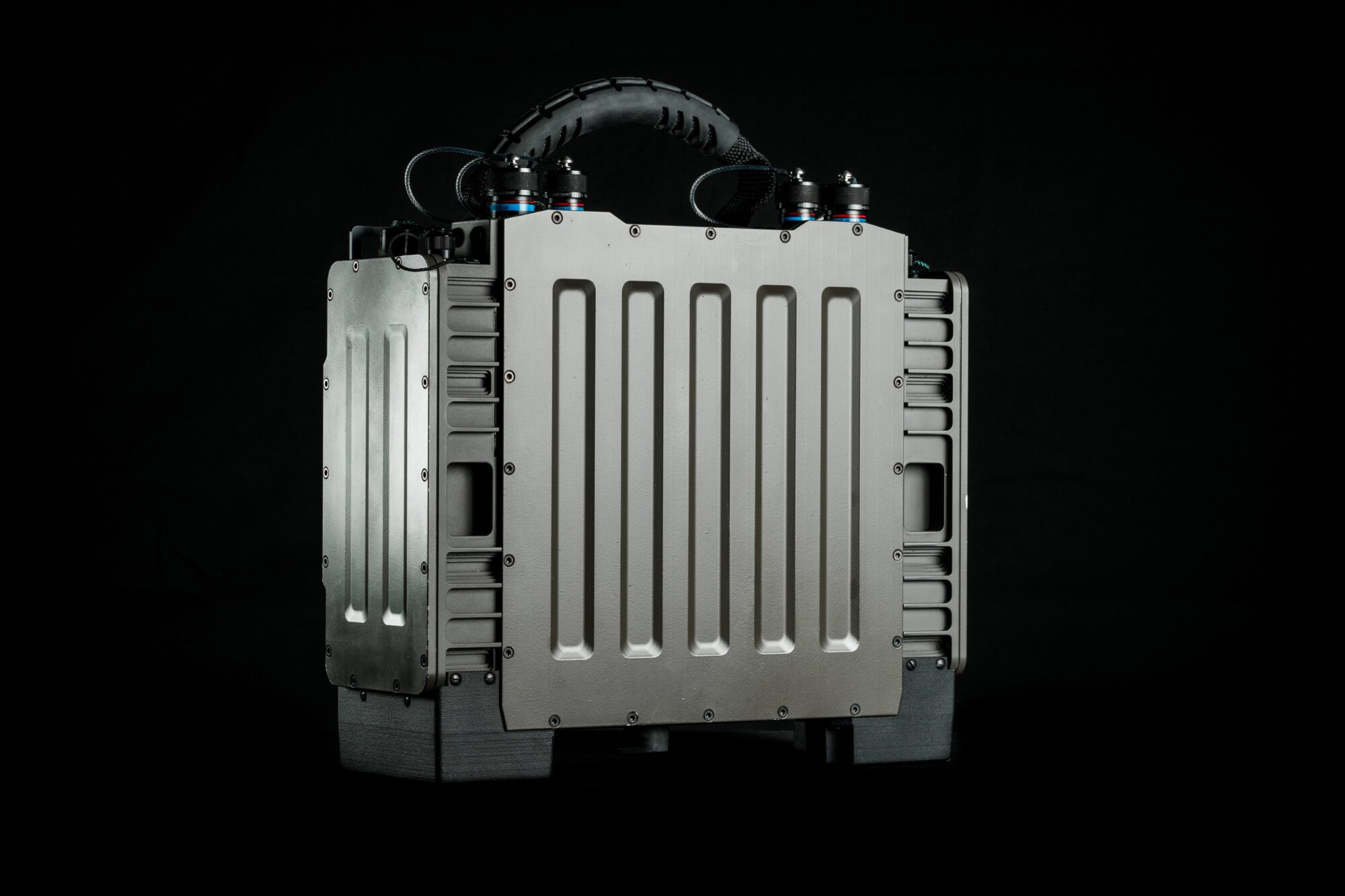
Because the threat changes faster than any procurement cycle, we designed our EW systems to change with it. They are modular in hardware and in software: radios slot in and out of one housing, so a damaged unit can be swapped in the field and a new capability fitted the moment the threat demands it. Customers choose the elements they need, integrate them with systems from other suppliers, and write their own software on top using intelligence they hold in country and choose to keep. We build on open standards and work within an ecosystem of complementary technology companies, because the strongest capability is built together.

Built for the fight the customer has.
Few customers buy from a clean sheet. Most arrive with a satellite terminal here, a tank bristling with antennas there, and EW equipment they switched on four years ago, which was expensive and which they are loath to throw away. We integrate what is already there and connect it to the networks it needs, and capability emerges when the parts start talking to each other. We integrate where we need to and build from scratch, at pace, where it’s required.
That flexibility extends to how fast we move. We run at every speed, from a rapid prototype that proves a concept in weeks, through a proof of concept in the customer’s own environment, to a full assured programme with every safety and security approval a defence customer needs, and the same engineers carry the work from the first stage to the last.
We stay until the mission is served.
An EW system is only as good as the last change the adversary made, so delivery is where our work begins. We embed with the customer’s operators and train them, then adapt the system as the threat evolves: new hardware when the antennas harden, new protocols when the software changes. Speed matters at every stage, in buying the capability, in replacing it and in repairing it, and we build the service around that.
Already at the mission edge.
-
EM-Vis
Electromagnetic surveillance, direction finding and Electromagnetic Attack (EA), in service with UK and international customers.
-
A partner nation
Roke EW systems and a partner company’s complementary capability deployed together as one integrated system.
-
Land C4I
Client-side support across the UK’s tactical radio estate.
-
Insights
A published series on why Electromagnetic Warfare (EW) is hard and where it is heading.

Get in touch to stay ahead of the threat.
Tell us the spectrum you operate in and the kit you already field. Our EW engineers can be in the room within hours.
Read our Electromagnetic Warfare insights



Electromagnetic Warfare – FAQs
Electromagnetic Warfare (EW) is military action that exploits electromagnetic energy to provide situational awareness and to create offensive and defensive effects. It is the combat arm of Electromagnetic Operations and applies in every domain: air, land, maritime, space and cyber. Roke uses the NATO definition and the NATO term.
Yes. NATO previously used the term electronic warfare and the two are still used interchangeably. NATO now prefers Electromagnetic Warfare (EW) to emphasise the importance of the electromagnetic spectrum, and Roke follows that convention in all of its work.
Electromagnetic Attack (EA) is the offensive use of Electromagnetic Energy, Jamming usually refers to specifically overwhelming a communications system so it is “jammed”, or no longer can communicate while the jamming signal is being transmitted. EA is much broader and can include effects such as deception or even defeat, which stops a communications device from working, even after you stop transmitting.
Direction finding measures the bearing of a transmission from a sensor. It can be done in a number of ways based on different characteristics of the received signal. Multiple direction finds (DFs) can be combined to create a Position Fix (PF) on a particular target. Depending on the type of DF being used, either two or three sensors are required to generate a Position Fix.
A software-defined radio (SDR) does in software some of what older radios did in fixed hardware: tuning, filtering, modulation and the synthesis of waveforms themselves. In EW that means they are often much more flexible and can gain new capability through a software update when the adversary changes. Roke’s software-defined radios sit inside EM-Vis Deceive.
The spectrum contest changes weekly, and equipment gets destroyed in high-intensity war. Open, modular systems let operators swap hardware and software as the threat moves, integrate kit from several suppliers, and add their own software. A sealed single-supplier system cannot keep pace.
Yes. Most Roke EW work starts with equipment the customer already fields. We can sympathetically integrate legacy systems, connect them to tactical networks and add capability where it is needed, so existing investment keeps working as we know our customers don’t buy everything all at once.
Yes. Roke supplies EW technology and services in the UK and to nations across the globe, subject to UK export controls.
Resilient position, navigation and timing is part of our Operational Technology and Resilient PNT capability.